Tag Archives: Work

Topics related to professional life, careers, productivity, and workplace experiences.

#9 A job market transformation – Part 2

(Average Reading Time: 8 minutes)

There are many aspects to consider before moving to a new country or city. Right now, though, the list goes beyond the usual considerations like culture, language, lifestyle expectations, or city appeal. We are undergoing powerful transitions in society, technology, and geopolitics that could reshape our perception of the world for a long time. And it’s not just individuals who need to adapt; families, institutions, communities, and companies must also come to terms with what is happening now and what these changes will bring.

Leaving aside the topic of artificial intelligence—which is already having a major impact in ways we can hardly predict—there are other significant forces at play. For instance, there is a noticeable shift toward more conservative and right-wing policies, which are changing how societies think about immigration. In recent years, there was a wave of solidarity and openness toward migrants, but now a more pragmatic and less tolerant narrative is gaining ground. It’s happening so quickly that even people who previously found this kind of mindset unthinkable are now aligning with it.

Wars are breaking out in various regions, directly threatening Europe’s stability. The conflict in Ukraine has already had far-reaching consequences, with economic sanctions, energy crises, and shifting military strategies impacting countries across the continent. Meanwhile, China’s booming exports of electric vehicles are challenging Germany’s longstanding dominance in the automotive industry, sending shockwaves throughout Europe. The country that once set the benchmark for car manufacturing is now grappling with the pressure to innovate and stay competitive in a rapidly changing market.

These developments stir up fear, and fear often leads to a desire for strong leadership. This dynamic can pave the way for leaders who use nationalism and populist rhetoric to appeal to people’s insecurities. When a society starts to retreat into itself, valuing national pride over openness, the consequences can ripple through everyday life, influencing social interactions, job opportunities, and even cultural trends.

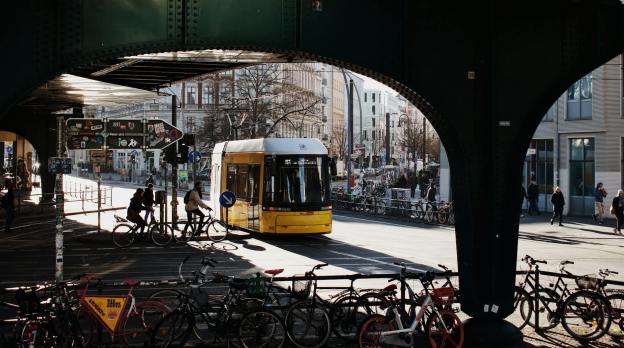
Here in Berlin, for example, I’ve noticed a shift toward a more conservative mindset. While there are still job opportunities, they are increasingly more accessible to locals or, at the very least, to those who speak the language fluently. The city’s diverse and international reputation is still alive, but the job market is no longer as accommodating to newcomers who lack strong German language skills. As companies face economic uncertainties, they prioritize candidates who can quickly integrate into the workplace culture and communicate seamlessly with customers and colleagues.

Moreover, the country’s economy is struggling to regain its footing amid global challenges. The energy crisis sparked by the war in Ukraine, combined with the disruption of the automotive industry by Chinese competitors, is creating a perfect storm of economic pressure. Inflation remains a concern, with rising living costs eroding the quality of life for many residents. For those considering a move to Germany, especially without a clear professional path or language skills, this might not be the best time to take the leap.

Germany’s situation serves as a reminder that the global landscape is shifting. What was once a relatively predictable place for career growth and stability is now part of a broader trend toward economic protectionism and social conservatism. The conditions that made it an attractive destination are changing, and anyone contemplating relocation should weigh these factors carefully.

It is important to acknowledge the complexity of this topic, as there are many other historical, economic, and social dynamics that I have not addressed here. This post is not an attempt to exhaust the subject but rather a personal reflection to make sense of what’s going on in these uncertain times.

To be continued.

#8 Care less, work smarter

(Average Reading Time: 7 minutes)

There are some simple lessons in life that we should never forget, as they have a significant impact on our mental and physical well-being. Things like going for a walk every day, spending time with friends, avoiding ultra-processed foods, cutting back on alcohol and smoking, not taking what people say too seriously, having a hobby, setting personal goals, and limiting social media use are all crucial. These practices form the building blocks that shape our values and behavioural patterns, helping us grow in a healthy and sustainable way.

That being said, there is one major lesson I find myself coming back to over and over again: caring less about my job. I have to constantly remind myself of this, as it’s easy to get caught up in the demands and pressures of work. But what do I mean by “caring less”? Or rather, what don’t I mean?

I don’t mean being unprofessional, neglecting our responsibilities, ignoring our colleagues, or disregarding the values of the companies we work for. We all know what we’re signing up for when we accept a job, and that involves meeting certain expectations. What I do mean is not letting work dominate our lives, not thinking that our self-worth is tied to promotions, or believing that our achievements define who we are. It’s about recognizing that being a top performer, having a perfectionist approach, or always striving for the next goal doesn’t necessarily lead to a fulfilling life. We must realise that accuracy and timeliness should not come at the expense of a sustainable and supportive work environment.

At the end of the day, we all need a warm meal, shelter, and clothes—that’s why we work. But what truly matters is cultivating a sense of community and connection, which is far more valuable than chasing status or praise.

Here’s what I’ve learned about working smarter by caring less

Blend in with the team, but don’t lose your values. This doesn’t mean conforming to every workplace norm or abandoning your principles; it means finding a balance between fitting in and staying true to who you are.

Optimise your efforts. Do your job well, but make it effortlessly. Working smart means completing tasks effectively without overexerting yourself. Strive for consistency and efficiency instead of always aiming to over-deliver. Remember, sometimes “good enough” is just fine!

Make friends at work, not enemies. You’ll spend a significant portion of your life with your colleagues, so keeping relationships pleasant is essential. Minimise stress by avoiding conflicts, steering clear of unnecessary arguments, and fostering a smooth, cooperative work environment. Focus on getting tasks done well and quickly without feeling the need to prove anything to anyone.

Detach your identity from your job title. Your worth isn’t defined by your position or company achievements. What you do for a living is not who you are as a person. It’s crucial to maintain a healthy boundary between your professional life and your sense of self.

Prioritise your time and energy. Ask yourself, “Is this worth the stress?” If the answer is no, don’t overextend yourself for something that won’t matter in the grand scheme of things.

What not to do

Don’t obsess over performance reviews. They often create a false sense of purpose and can lead to frustration. Instead, focus on what genuinely matters to you in your profession, whether it’s helping clients, mentoring colleagues, or refining a particular skill.

Don’t compare yourself to others. It’s tempting to measure your success against your peers, but this only adds unnecessary pressure. Concentrate on your own daily progress and keep things simple—your career is your personal journey.

Don’t let work dictate your happiness. If your mood swings according to your job performance, you’re giving too much power to external factors. Find joy and fulfillment outside the office, where real life happens.

Don’t feel obligated to respond to every email or request immediately. Not everything is urgent, and learning to prioritize and set boundaries is key to avoiding burnout. Manage expectations by setting reasonable response times.

Life is much more than the work we do

We often tie our self-worth to professional achievements, letting our jobs shape our identities. When we start caring less about what society tells us important, we create space for a healthier, more balanced life. Understanding what working smart means to us is key. For me, it’s about knowing when to let go, setting boundaries, and choosing sustainable growth over chasing perfection.

#7 Going through the stages of a layoff

(Average Reading Time: 8 minutes)

As I wait to start my new job role at the beginning of next month, I can’t help but reflect on what brought me here: the layoffs at my previous company. It’s a frustrating topic—especially as layoffs have been an unfortunate trend this year too—but one worth sharing. Many professionals are currently going through the same experience, and I hope this reflection might help someone navigate their own journey.

Experiencing layoffs for the first time can be overwhelming. The emotions that come with it—shock, frustration, even shame—are intense. Looking back, I realize that if someone had told me what lay ahead, I might have reacted more positively (or maybe not, who knows!). But one thing I’m sure of is that, if I had to go through it again (which I hope I don’t), I’d handle it better, thanks to the lessons I’ve learned.

Here are the stages I went through, from the moment I received the bad news to the moment I landed another job.

The shock

I had a sense that something was coming at my company, but I didn’t expect it to hit me. Just weeks before, I’d joined a new team with the prospect of being promoted to lead the content internationalisation efforts. It was a challenging time—my manager was on maternity leave, and the workload had increased. The team was struggling, morale was low, and I was left to figure things out on my own.

But that’s where I thrive. I love high-pressure situations. Just as I started to get a handle on my new responsibilities, I received an email: a sudden 15-minute all-hands meeting scheduled for Monday. It felt suspicious. We had just acquired a competitor, so nobody expected layoffs. But I did. Company communication had been poor for months, with leadership throwing out vague praise like, “You’re all in the driver’s seat!” despite the bad numbers and other red flags that were as obvious as a summer sun.

When the CEO and founder announced that 20% of the workforce would be laid off, we were all stunned. They said we’d know who was affected within 30 minutes. It was one of the longest half-hours of my life, but deep down, I knew I would be on the list. And I was right.

Anger, hurt, and feeling lost

The email arrived, confirming what I feared. I felt angry, hurt, and, most of all, lost. It was a shock that hit me harder than most life events—on par with moments like the covid lockdowns or the loss of a loved one. Working in an almost fully remote team made it worse. There was no office to gather in, no teammates to share a drink with after a devastating day. My company accounts were shut down immediately, leaving me isolated. I felt ashamed, even though there was no reason to feel that way.

The loneliness of remote work and my sense of disconnection, reminding me of my childhood years, when I first moved to Italy and struggled to adapt to a new culture. The layoff brought back those feelings of being lost and misunderstood.

Navigating the German job market and filing for unemployment

Though it was a tough time, I’m grateful that it happened in Germany. The country’s social support system is exceptional. I eventually turned to the Agentur für Arbeit to file for Arbeitslosengeld (unemployment benefits), and while the process involved a lot of paperwork and back-and-forth, I felt supported. They provided clear guidance, and my previous company also did what they could to help us transition. But, at the time, I was too emotionally drained to fully take advantage of those resources.

Still, Arbeitslosengeld helped me cover my rent and necessities while I regrouped and planned my next steps. For anyone going through a similar situation, I highly recommend contacting the Agentur für Arbeit right away (it must happen within the first three working days following the layoff)—it’s a crucial step in moving forward.

Seeking distractions

During the summer 2023, I sought distractions wherever I could. I enjoyed what Berlin had to offer: spending a few weekends at Berghain, attending the Fusion Festival, or just getting lost in the city’s vibrant culture. It was a much-needed escape from the daily grind of rejection emails and fruitless interviews.

I realised that, sometimes, it’s okay to take a break. Finding balance is key when you’re in such a high-stress situation. The emotional toll can be heavy, and allowing yourself moments of joy can help you stay resilient.

Rebuilding my job search strategy

After a few months, I had to face reality and reconstruct a proper structure for my job search. I overhauled my CV, updated my LinkedIn profile, and reached out to my network. It was a repetitive, exhausting process—applying for jobs, going through endless interviews, and then never hearing back from recruiters.

But I didn’t give up. I also took the opportunity to improve my German, enrolling in a courses, workshops and other professional activities. It helped me feel productive and gave me the confidence to apply for roles that required a higher level of language proficiency.

The lucky break

And then, when I least expected it, I received the call. A new job offer! It’s funny how that works. After months of feeling stuck and discouraged, everything turned around in a single phone call.

Looking back, I see that the job search is like planting seeds—you never know when or where they’ll sprout, but persistence pays off in the end. If you’re currently in this stage, know that your lucky break might be just around the corner, even though it might feel that way.

#6 Reconnecting with an old colleague

(Average Reading Time: 4 minutes)

Yesterday, I had a video call with Andrea, someone I had the pleasure of working with back when I was living in Barcelona. Andrea and I were quite close, and along with Alberto, another colleague from our team, we used to go swimming twice a week. We shared breaks, went for after-work drinks, and had intimate conversations—all as a trio. It felt like an empowering and well-balanced brotherhood. But life took its course, and our bond slowly faded as new adventures drew us into different environments, new people, and new groups.

A month ago, I reached out to Andrea for a work recommendation, and he didn’t hesitate to respond. That simple message sparked a conversation that eventually led to the video call I mentioned.

Andrea is one of those rare people who brings harmony wherever he goes, without even trying. He has this approachable, non-judgmental vibe, and he’s easy to talk to—kind, generous, knowledgeable, and creative. On top of that, he has an infectious sense of humor. As we talked, I couldn’t help but think, “How did I let such a great friend slip away from my life?” We realized we hadn’t spoken in eight years! When we did the math, we kept repeating, “crazy, crazy.” But is it really? For me, this has become a normal pattern.

I’ve started my life over at least five times, each time in a different country, with different languages, cultures, and, of course, social circles. My whole life has been lived abroad. When I was nine, my mother and I moved to Italy, and we never really went back. That meant leaving behind friends and relatives who were close to me during my childhood. This wasn’t by choice—it’s just a reality I had to accept early on. When you move so much, you need to emotionally adjust, letting go of people in order to make room for the new ones you meet at each stage of life.

This conversation with Andrea made me reflect, but I will not turn it into some resolution. My bucket list already has enough to-dos, and the last thing I need is another random one. However, what I am taking away from this amazing reconnection is the importance of nurturing the unique relationships that currently bring me joy. I am realising more and more, even though pretty late, that it’s not just about moving on to new experiences, but about recognizing the value of the connections we’ve made along the way. Life may constantly evolve, but it’s the enduring relationships that provide a sense of continuity, grounding us in who we are, no matter where we go.

#5 Reflecting on the journey and what’s next

(Average Reading Time: 6 minutes)

My job search is finally over. After a full year of unemployment following massive layoffs at my previous company, yesterday I signed a contract for a new role that I’m genuinely excited about. As with my other posts, I won’t disclose details about the company, but what I can share is that the process went smoothly from the first email to signing the contract. The product is fascinating, the team seems great, and I can’t wait to collaborate with them to deliver the best customer experience possible.

Thankfully, I don’t start immediately, which is a relief because looking for a job in this climate has been a full-time job in itself. After months of emotional highs and lows, interview after interview, I’m truly grateful to have a little time to decompress, reorganize myself, and recharge my energy before diving into this new chapter.

One thing that has surprised me, though, is how quickly my brain shifted into “preparation mode” now that such a vital part of my life is stable again. It’s incredible how we’re wired to find the next challenge, the next problem to solve. At least, that’s how I function—I’m sure not everyone’s like this.

I just can’t stop. I always push myself, and I think I always will because it’s what drives me. What’s different now, compared to years past, is the way I speak to myself. I’m more understanding, compassionate, and aware of my limitations. I know when to push and when to rest. This newfound clarity is essential for sustainable growth, and I plan to carry it with me into this new role.

As I mentioned, I’ve already gone into preparation mode. I’m thinking about how to structure my day around a new routine, what I need to learn, and what areas I need to refresh. My commute will take about two hours round-trip, and with an eight-hour workday plus a one-hour break, I’ll be away from home for eleven to twelve hours daily. Since I usually sleep about seven hours, I’ll have four to six precious hours left for myself each day.

In this new role, I’ll be using all the languages in my arsenal, which means I’ll need to refresh certain skills and develop new scripts since I’m returning to a customer-facing position. I’m thrilled, but it will require serious organization and a lot of learning to quickly close any gaps in my knowledge about the new topics and ways of working. Still, I’m excited and eager to pave a new path for myself. Let’s see where this journey will take me.

As I prepare for this new chapter, I’m reminded that growth is not about always being perfect but about finding balance. It’s about knowing when to push forward and when to recharge. I’m looking forward to this new challenge with a fresh perspective, excited to see how much I can learn and achieve. Here’s to new beginnings and the opportunities ahead!

#4 A job market transformation – Part 1

(Average Reading Time: 4 minutes)

If I’ve understood the data published by the German employment agency this month correctly, things on the job market here in Germany are getting worse and likely won’t improve in the near future. I can only hope that the EU’s forecast for next year holds true and that 2025 will bring us not just the federal elections but brighter news on this front as well.

Five years ago, when I moved to Berlin, just before COVID hit, the job market was thriving. Before that, I had spent four years living in Barcelona, where salaries were so low that even while working for a prestigious companies, I struggled to make ends meet—and I was living by minimalist principles!

So when my ex decided to move to the former European startup heaven (yes, Berlin), I didn’t think twice about following. Sure, I was in love and ready to follow her anywhere, but Berlin had its own pull. It was not just the obvious reasons—its reputation as a hub for social progress, its cosmopolitan openness, its rich cultural life, its spectacular history, and its proximity to stunning nature. I also had a personal goal: to face the German language once again. I had studied it for a few hours a week in high school but retained almost nothing—and was soon reminded why!

When I first arrived, I think I applied for maybe three jobs, got one callback, went through the interview process, and landed the position. Easy peasy.

While employed, I regularly received messages on LinkedIn from recruiters eager to bring me to their teams. Everything was buzzing, and it felt like all doors were open. They called it an “candidate-driven market,” a sharp contrast to today’s “employer-driven” one.

Back then, the number of English-speaking jobs was staggering, to say the least. It felt like I was living in a bubble where speaking German was barely necessary for daily life.

But things have changed dramatically, and it all happened so fast. For expats, especially those like me who were laid off, it’s been a harsh reality check—a bitter pill to swallow.

Continue reading Part 2 >>