Tag Archives: Tips

Practical advice, guidance, and strategies for personal, professional, or creative improvement.

#44 What’s next? Ten years pregnant with a novel

Listen to this post

More than ten years ago, I wrote a book. A novel. A draft of a novel. Actually, I’d say half of it is ready to publish, the other half is still a work in progress. I keep repeating to myself that sooner or later I’ll get it done, but until now, I haven’t managed it.

Achieving that, though, would finally set me free—and I’d be able to write my second novel, or at least start brainstorming about it.
Until now, it has felt like being pregnant for ten years—wanting a second child but unable to have one until you give birth to the first. I’m not sure if this is the best analogy, considering I’m not a woman, but it seemed funny when I first wrote it down.

Last year, while I was unemployed, I dedicated some time to polishing my manuscript and sent it to an editor—a friend of a friend—who had kindly offered to read the first part of my draft. I knew it wasn’t ready. I knew I still had to work on it, probably over and over again. Not that I haven’t already, but self-editing can be a rabbit hole where one easily gets lost in lateral overthinking.
I was afraid of sharing it with anybody at that stage—especially an editor. Besides, the experience of unemployment had left a scar on my ego. I was already so full of self-doubt that exposing myself in such an intimate way was the last thing I wanted.
Yet, I did it—I shared the first part of the book with the editor. And guess what? I was right. The manuscript wasn’t ready—according to him, too. He suggested I set it aside, let it rest, and write short stories, articles, anything but touch that manuscript. He also asked me—perhaps testing my resolve—if I was sure I even wanted to keep writing. “Why would you want that?” he asked.
It was a real setback, but it didn’t demotivate me. Not because I have a will of steel or anything like that. There are just some things I can’t live without. In other words, if I had to answer his question—“Why do I want to write?”—it’s not that I want to. It’s that I can’t do otherwise. I need it.
But as I said, at the time it felt like a setback, also because I focused mostly on the negative part of his feedback.
He had, in fact, shared valuable positive feedback. When I made an effort to develop a character with empathy and care—rather than rushing the story and piling up dialogue—he said he felt more connected to it. He also noted that he could sense when I was being honest and when I was hiding something. When I was free writing, he said he particularly liked my dark humor and sarcasm.

One always has to take feedback with a grain of salt, but this came from a professional in the industry who has analyzed hundreds of books, if not more, given his experience in the industry. Most of all, his opinion felt true to me; it resonated, and his tone was genuine.

Now, after following his advice for a while, I want to make the most of what I’ve learned and finally complete this first novel process.
To proceed, I realized I needed three things:

1) Accountability
2) A clear goal
3) A good method

And I think this blog gave me all three.
My goal, in fact, is to periodically review and publish a few paragraphs of my novel alongside what I’m already writing (spontaneous reflections, short stories, etc.). The people who enjoy reading my content will help keep me accountable. As for the method, I believe taking this slow-paced but consistent and rewarding approach—instead of trying to finish the whole thing all at once—will benefit my motivation and help me stay disciplined and loyal to my overall approach.

This whole plan or realisation is not an original idea of mine. In fact, I have to thank the WordPress community for sharing so much amazing content so openly and for inspiring me with their approaches and consistency.
If you’re interested in embarking on a similar path, I highly recommend checking out the blogs Faded Houses, Great – Almost Meaningful, and Edge of Humanity. Read their content and take note of how they structure their pages—it’s really well done!

So, to conclude, I’m going to follow this strategy: alternating between short stories, spontaneous reflections, and—primarily—my novel, which is written in Italian. I intend to keep it that way, as translating it into English, even though beneficial in terms of broadening my audience, would only add another layer of challenge, and my objective is to keep this process as lean, uncomplicated, and enjoyable as possible.

If you’re Italian, or have Italian friends interested in following a novel as it evolves toward publication, I warmly invite you to stay tuned and share this blog.
Your presence and feedback mean more than you know.

#42 Your posts are automatically copyright-protected, however…

Listen to this post

…there are some things to keep in mind.

Works from others that we may utilize—like photos, quotes, videos, and so on—don’t become our own just because we repost them. Sounds obvious, but in today’s world… I don’t know, man, I think it’s always worth stating the obvious, even at the cost of sounding redundant.

So yes, this general copyright rule applies here as well: one should always quote someone else’s work—always!

Then there’s the AI topic, which complicates things a little. Without diving into specifics about jurisdictions and what different countries allow, I’ve gathered from some sources I’ve consulted that AI use is permitted as long as it’s not used for major modifications or to generate content from scratch. Which absolutely makes sense to me.

As long as we use tools like ChatGPT, Grammarly, and DeepL to correct grammar and improve clarity, it’s fine. It’s like having a personal proofreader at your disposal, which speeds up the process. And that’s the coolest part of these tools. Even though, to me, they’re the most diabolic invention ever; but I don’t want to unpack this topic. It’s just depressing, especially for us creatives… But hey, the proofreader part is pretty cool. I know this sounds inconsistent and opportunistic, but one has to adapt somehow.

So, to conclude: the original content we publish on our blogs—articles, essays, poetry, short stories, novels, photos, illustrations, videos, audio; in general, any creative piece of work originating exclusively from our own brain that doesn’t plagiarize existing material or wasn’t generated from scratch by a freaking AI tool—is ours. A bit like it would be if it were published by a traditional editor (for writers)—with the pro that there’s no transfer of rights, and the con that we make zero money from it. If you do (make money), please share some tips—hehe. The right to reproduce the work, distribute it, display it in public, create derivative works, and so on, belongs to us—the creators who published it on their own page.

Another thing to keep in mind is to display a copyright notice on your website, like I did on my homepage (BLOG). It’s an extra layer—a bit like a bulletproof vest working as a disclaimer—which could offer additional protection in case of a dispute.

There are endless sources on this topic out there, and it’s a complex one since international law is involved. If you’re an expert on this topic, please feel free to call out any bullshit I may have said—or share any useful tips or insights that could be helpful for the community.

Here are some quick sources I used:

https://europa.eu/youreurope/business/running-business/intellectual-property/copyright/index_en.htm

https://www.copyright.gov/help/faq/

https://www.gov.uk/guidance/artificial-intelligence-and-ip

https://www.iubenda.com/en/help/43711-how-to-copyright-a-blog

#29 Uma breve distinção: ambição construtiva e ambição destrutiva

Eu tento sempre pensar em qual será o próximo passo importante que darei na minha vida. E com “passo importante”, quero dizer algo que me fará avançar como indivíduo. No entanto, às vezes me questiono se essa mentalidade não pode acabar complicando nossa vida, em vez de melhorá-la.

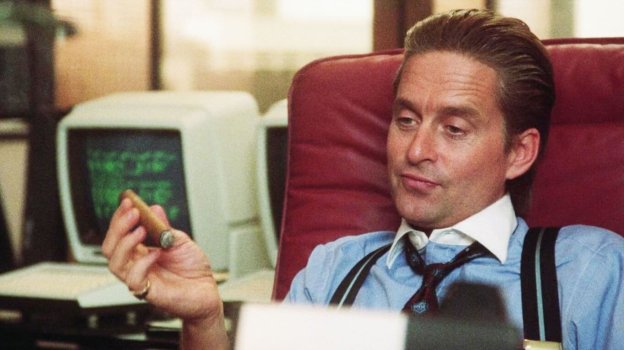
Ouso fazer uma distinção entre ambição construtiva e ambição destrutiva. E, ao usar “destrutiva”, não o faço de maneira leviana. Pelo contrário, acredito que uma ambição mal direcionada pode nos levar à perda da saúde, tanto física quanto mental. E não apenas a nossa própria saúde, mas também a das pessoas ao nosso redor. Um exemplo claro disso é a figura de Gordon Gekko, do filme Wall Street dos anos 80, cuja filosofia “ganância é boa” (“greed is good”) reflete perfeitamente os perigos da ambição destrutiva.

O drama dessa questão é que quem é um vetor da ambição destrutiva, na maioria das vezes (e digo isso com base apenas na minha observação pessoal, sem qualquer fundamento em pesquisa científica), não tem consciência disso. Ou, então, foi tão corrompido por essa ambição que já não há mais volta.

Por outro lado, quem manifesta ambição construtiva tem um poder incrível: sua energia parece fluir sem esforço e iluminar muito além de si mesmo. Acredito que essa ambição surja da aceitação de que a vida é feita de ciclos, mais ou menos semelhantes, mas sempre desconhecidos. Podemos imaginar o amanhã, mas nunca saberemos exatamente como ele se desenvolverá. E não saber o que nos espera, não ter controle absoluto, não é algo ruim. Pelo contrário, aprender a se entregar ao desconhecido nos ensina a aceitar o fluxo natural da vida.

Já a ambição destrutiva parece estar enraizada no desejo de controle. E esse desejo, por sua vez, nasce do medo de perdê-lo. Por isso, essa forma de ambição tem um poder corrompedor: tudo aquilo que não sabemos deixar ir tem o poder de corromper nossa alma.

#27 Talk with each other, not about each other: a leadership lesson

A couple of months after starting my current job, the CEO gave a speech at the company’s ten-year anniversary event.

I’ve never been a fan of corporate speeches. I often find them repetitive, inauthentic, and lacking the kind of substance that resonates with me. As far as I remember, my peers in previous companies felt the same way—we would roll our eyes in sync at nearly every sentence. At times, these speeches felt like emotional manipulation, borderline blackmail, yet another attempt to motivate a tired and bored workforce to go the extra mile, again and again, for the sake of the product, the company’s vision, and ultimately, the leadership’s agenda.

However, at this end-of-year event, I was pleasantly surprised by the CEO’s words. His speech wasn’t about numbers, nor did it attempt to persuade everyone to rally behind a mission full of empty promises. It wasn’t an ego-driven monologue designed to make us grovel at his feet. Yes, there were glasses raised to celebrate the company’s achievements, but the focus was on gratitude. He thanked almost everyone in the room, individually and as a team, highlighting something specific that each person contributed, recognizing qualities worth appreciating.

It was a long evening of speeches—maybe too long for my taste. I left earlier than most because, honestly, I never linger at these events. I already spend countless hours at the office, giving my all to my work with the highest level of dedication. Once I’m out, I want to live my life.

Even so, I walked away from that event with one key takeaway: a sentence the CEO shared at the end of his speech. He reminded us that we are a team and, to collaborate sustainably, we need to uphold certain core values. He summed it up perfectly by saying, “Talk with each other, not about each other.”

I can’t even begin to describe how much those words meant to me. They deeply resonated because, too often, workplace dynamics evolve into what people call “company politics.” In my experience, this term doesn’t have a positive connotation. It often means talking the loudest, speaking behind others’ backs, and adopting an overachieving, opportunistic mindset.

By saying, “Talk with each other, not about each other,” he championed values of collaboration, honesty, and a focus on the craft itself, instead of wasting energy on counterproductive behaviors. Those words inspired me to channel my efforts into genuine teamwork and meaningful contributions.

#18 A compass for the year ahead that works

I initially wanted to write yet another 2024 wrap-up, which would have most likely turned into a me-me-me redundant post filled with complaints about my “almosts” and “not yets” from the past year. Instead, I prefer to share something that brought clarity to previous years and became a reliable tool for a hopeful start to each new year.

Nowadays, we receive end-of-year wrap-ups and new year’s resolutions updates from almost every app on our phones. This barrage can make reflecting on recent experiences and planning ahead feel overwhelming. However, cutting through the noise to find a tool that truly works for us can transform these reflections into powerful and inspiring activities.

For the last four years, my go-to tool has been a booklet called Year Compass (which you can download entirely free here).

I was first introduced to it by my ex-girlfriend. We began filling out our respective booklets together at her parents’ chalet-style home in Brussels, sitting in front of a rattling fireplace as snowflakes fell like tiny meteorites, driven by a strong and gelid wind. Despite this picturesque, almost dreamlike setting, my first experience was painful. It took me at least three hours to complete the entire Year Compass, as it required deep reflection across all the major spheres of life.

Each year, though, the process became easier, and its effectiveness grew to the point where I can’t imagine starting a new year without it.

So, for anyone seeking a way to process their experiences, integrate the past year with a sense of accomplishment and closure, and face 2025 with renewed hope and confidence, I highly recommend filling out this amazing and completely free tool. You can download it easily, and it’s best to complete it before the new year begins—or at the latest, within the first two weeks of January.

#15 When stoicism turns sour

The Slow Drift Into Pessimism

The way I understand it, the Stoic approach teaches us to accept whatever comes our way with calmness, without compromising our values. And I think it’s a valuable way to see things. However, over time, I realized that this philosophy led me to focus more on the negative possibilities lying ahead rather than the positive ones. I started to picture worst-case scenarios to prepare myself to accept them beforehand. I kind of twisted Stoicism to my own disadvantage—DIY philosophy gone wrong, ouch!

Focusing on the gloomy side of things eventually drained me, and I didn’t even realize what I was doing until I pushed it too far. At first, I would comment on discussions, expressing mainly opinions on what could go wrong. When someone called me out for being pessimistic, I would correct them, insisting I was just being “realistic.”

But this mindset snowballed. I began developing irrational fears about even the smallest things. I became extremely controlling—of myself, my habits, my activities, the situations I put myself in, and the people I met. I built a pattern of suspicion toward literally everything, and over time, it became more and more ingrained in my system.

High Performance, Low Humanity

What’s fascinating to notice, though, is that at the same time this mindset was evolving, I became more organized and productive than ever—but with a cynical and detached attitude toward others. Strangely enough, in terms of my career, this period marked the most significant advancements. I felt a bit like one of those high-ranking professionals or “psychopathic CEOs” living in a bubble of strategic thinking, productivity, and metrics-driven values.

But this way of thinking wasn’t sustainable, at least not for me. I’ve always been a sensitive person, deeply connected to and attentive toward the people around me. This mindset was kilometers away from my core.

Worse yet, I lacked the self-compassion to understand where all of this was originating from. My default relationship with myself was rooted in self-criticism and intolerance. I couldn’t stand myself anymore. Things got even worse: I slowly became paranoid. I lost my courage and, to a certain extent, my curiosity to go out, discover new things, and meet new people.

It took me a while to realize these patterns, but when I did, thankfully, I understood I needed to hit the reset button. I had to start working on myself and make the necessary adjustments, whatever that meant.

I needed to heal. And for the person I was back then—diffident, suspicious, and pessimistic—that was a journey I could only embark on alone.