Tag Archives: Society

the diplomat, netflix series

#64 From villains to vulnerability: comparing The Diplomat and House of Cards

Listen to this post

When I watched the third season of The Diplomat last weekend, by the end of it I felt disappointed—but I couldn’t quite tell why. Then, while discussing it with my girlfriend, I started comparing it to House of Cards, and things became a bit clearer.

House of Cards: a villain’s journey

In House of Cards, we follow politicians constantly walking a thin line between crime and legality, all while being pursued by relentless media investigations. Their desperate attempts to obstruct the journalists who hunt them down lead them to commit increasingly horrible crimes.

That, as simple as it sounds, is the show’s secret formula: it’s a villain’s journey, not a hero’s one. Frank and Claire Underwood create Machiavellian plans to gain ever more power and ultimately conquer the world. The media try to expose them, but the Underwoods manipulate everyone around them—using every dirty trick possible—to come out on top.

They betray both allies and opponents, many of whom crumble under the pressure of being framed and exposed. The only survivors are Frank and Claire: a psychopathic couple whose deceit and manipulation keep us glued to the screen. Despite everything, they remain loyal to each other.
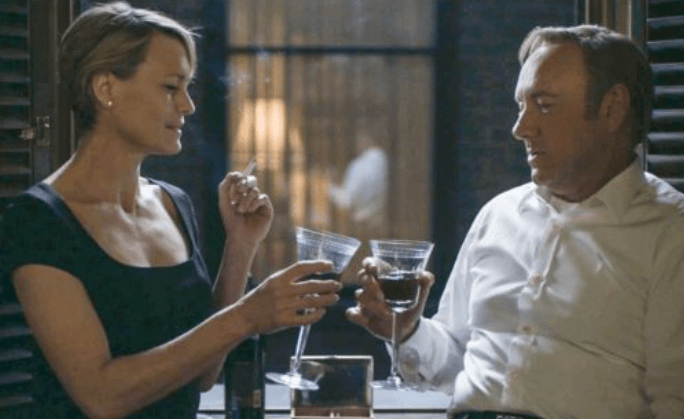
And that’s what we love about the show. Beneath all the corruption and ruthlessness, there’s an unbreakable bond—an unconditional love encompassing romance, friendship, partnership, and shared ambition. It transcends everyone and everything else. They are there for each other, no matter how dark the deeds. At least in the first two seasons, if I remember well… before things start to collapse.

The Diplomat: psychological politics

In The Diplomat, by contrast, we see a bunch of reckless players acting unchecked behind the scenes, seemingly with total impunity. They have a blank check to do whatever they want, which feels far removed from reality—especially in the American political system, where influential media like The Wall Street Journal and The Washington Post usually go to great lengths to expose wrongdoing, when they manage to grasp the full picture.

Kate and Hal Wyler, the couple at the heart of the show, have gone too far without ever having a real conversation about their problems, desires, needs, or pains. We meet them on the brink of divorce, and eventually, they do separate. They compete against each other, weighed down by doubts and insecurities.

Writing this now, I realize I actually appreciate the humanity of these two. Relationships are tough—no matter how powerful, rich, or influential you are—and the show captures that realism beautifully. I also like how flawed and conflicted everyone is. Aren’t we all?

We live in an age where it’s not just about pretending for others; we often end up lying to ourselves too. As a society, we’ve become both the performers and the audience of our own self-deception.

Are you not entertained?

Kind of—but not really.

Despite all these interesting layers, The Diplomat often feels more like a mockumentary than a political drama. The plot seems unnecessarily convoluted, and the dialogue is hard to follow at times. I kept feeling like I was missing something crucial.

Another aspect that caught my attention was the absence of characters representing figures like the Secretary of State and the Secretary of Defense—at least not in a consistent way. In a geopolitical thriller where the focus is clearly on the United States, the lack of these two key roles doesn’t make much sense.

The show also struggles to establish a clear antagonist—which, by contrast, in House of Cards was represented by the media. Here, the characters are their own enemies—an idea that could open deeper philosophical debates, but for a thriller, it risks losing the viewer’s emotional anchor. Geopolitics is indeed a complex, multidimensional puzzle, but as an audience, we still need to understand the stakes.

Maybe my expectations were too high for the second and third seasons, since the first one blew me away. Or maybe times have changed, and the creators are trying to capture something more elusive: our inner and outer chaos, the unpredictability of human behavior, and the blurring lines between hero and villain in a world of shifting power dynamics.

Perhaps that’s the point—how we think we understand reality, until a moment later, we realize we have no idea what’s happening.
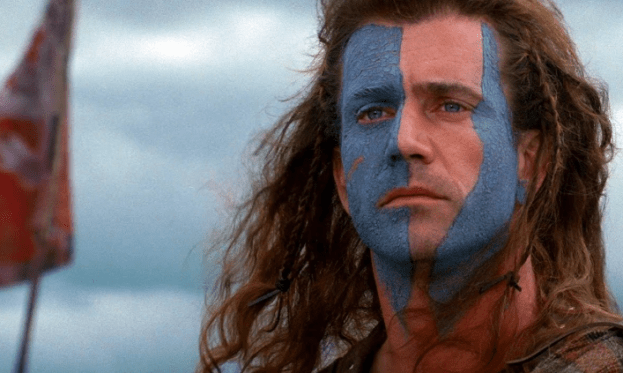
An image from the movie Braveheart (1995)

#32 Is freedom in crisis?

Freedom: the condition or right of being able or allowed to do, say, think, etc. whatever you want to, without being controlled or limited.

Freedom for basic rights

“Freeedoooom,” screams William Wallace at the end of the movie Braveheart, while English executioners tear his body apart during a prolonged torture before finally chopping off his head.
In the movie, based on a real story, Wallace fought to avenge the murder of his bride and for the freedom of Scotland.

In other parts of the world, right now, people are also fighting for freedom. Afghan women—who, up until the late 70s, had experienced steady progress in their rights, just like in many other parts of the world—saw decades of progress undone: first with the Soviet withdrawal, then with the international troop withdrawal led by the US. In both cases, a vacuum was left behind, filled by Taliban extremism, leading to violent repression of women’s rights.

The LGBTQ+ community is seeing their basic rights being repressed in Hungary (most recently a ban on the Pride parade under the guise of child protection—while neo-Nazi demonstrations are permitted—doesn’t bode well for this year’s Pride in June. Expect headlines about a harsh crackdown by the Hungarian government). This follows the Russian-style “putinization” supposedly aiming to restore or protect what some define as “conservative values.”

Ukrainians first fought to defend themselves from an invader, then were deluded by Western puppet masters into pursuing a war to defeat Russia. Now, they are being manipulated again—this time by what appears to be a Trump-Putin quasi-alliance, excluding Ukrainians from any real negotiations. Meanwhile, tens of thousands of men and women have lost—and continue to lose—their lives on the battlefields.

Investigations by international NGOs such as Human Rights Watch and Amnesty International have concluded that Israel is committing acts that amount to genocide against Palestinians. The word genocide is one that makes one flinch—especially when viewed through the painful paradox of Jewish history just 80 years ago. Meanwhile, Palestinians have been systematically denied a voice in much of the Western media, where coverage often remains apathetic, reduced to daily death tolls that now consist almost entirely of civilians.

But what we’re really witnessing is a clash of ideologies and propaganda that we’re all severely subjected to, often forced to take a side in every situation, whether we want to or not. We are like cows, completely submitted to the will of governments, corporations, organizations—masters who have full control over our lives as a collective. In fact, I would go as far as to say that we do not exist collectively outside the context of these institutions. Is it bad? Is it good? No idea. Maybe it’s brought more good than harm—after all, organizing eight billion humans any other way might be impossible.

An age of confusion

From one perspective, the restriction of freedom arises from fear. Fear leads to a utopian attempt at control. And control eventually backfires, giving rise to reactionary forces and movements that can themselves become radicalized. The clearest historical example: fascism and Nazism rising in the 1920s in reaction to communism and the form it had taken at the time.

When ideology proliferates and takes over rationality and critical thinking, the soil becomes fertile for dictatorial practices. Take Western moral hypocrisy—we’ve been brainwashed for years into believing that Western governments are ethically driven, morally superior, and paradoxically “blessed” with the lessons learned from past horrors: colonialism, the Inquisition, concentration camps, gulags, and more. We’ve been convinced of this narrative so thoroughly that we can no longer distinguish good from evil in a world where everyone believes they are on the “right” side.

Need for freedom

So, if collective freedom depends so much on rules, ideologies, and cultural practices—are we at least freer on an individual level?

I would argue we are not. The main reason: our actions have consequences. No matter the society, the community, the family, or the relationship—we live by a set of rules that limit our individual actions. To be truly free, one must be willing to accept the consequences of their actions. That’s where ethics, values, and education come into play. To what extent we’ve been taught to respect (or disregard) rules and others makes a huge difference in our lives.

Expectations through changes

And that’s where expectations come in—when we enter a relationship, start a new job, or move to a new city or country—and reality smacks us in the face. A process begins: we polish our behavior and adapt our values to fit the new environment. In doing so, we also discover which values we’re unwilling to compromise.

We swing like a pendulum between extremes: sometimes excited by change, sometimes completely frustrated or suffocated by it. That’s when tolerance, experience, and empathy become essential. The ability to accommodate each other’s differences while preserving respect for our own backgrounds and values is a difficult job—but not impossible.

Everything changes in this process, leading us down new and unknown paths, which naturally freaks us out. Then we swing back to the other extreme, trying to control things to reestablish balance, calm, and order—before opening ourselves to the next wave of novelty.

If we pay attention, we’ll see this pattern not only at the individual level but also collectively. The real danger is when we freak out too much—and lose our minds.