Freedom: the condition or right of being able or allowed to do, say, think, etc. whatever you want to, without being controlled or limited.
Freedom for basic rights
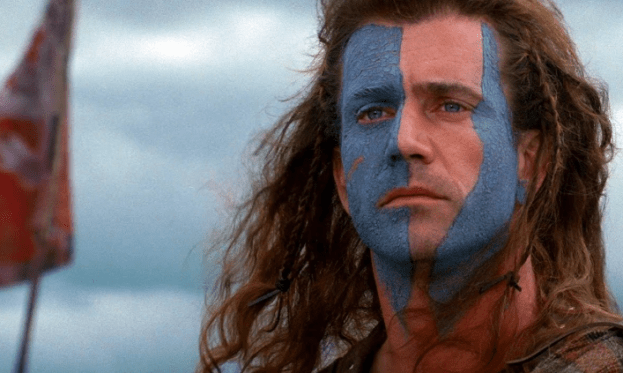
“Freeedoooom,” screams William Wallace at the end of the movie Braveheart, while English executioners tear his body apart during a prolonged torture before finally chopping off his head.
In the movie, based on a real story, Wallace fought to avenge the murder of his bride and for the freedom of Scotland.
In other parts of the world, right now, people are also fighting for freedom. Afghan women—who, up until the late 70s, had experienced steady progress in their rights, just like in many other parts of the world—saw decades of progress undone: first with the Soviet withdrawal, then with the international troop withdrawal led by the US. In both cases, a vacuum was left behind, filled by Taliban extremism, leading to violent repression of women’s rights.
The LGBTQ+ community is seeing their basic rights being repressed in Hungary (most recently a ban on the Pride parade under the guise of child protection—while neo-Nazi demonstrations are permitted—doesn’t bode well for this year’s Pride in June. Expect headlines about a harsh crackdown by the Hungarian government). This follows the Russian-style “putinization” supposedly aiming to restore or protect what some define as “conservative values.”
Ukrainians first fought to defend themselves from an invader, then were deluded by Western puppet masters into pursuing a war to defeat Russia. Now, they are being manipulated again—this time by what appears to be a Trump-Putin quasi-alliance, excluding Ukrainians from any real negotiations. Meanwhile, tens of thousands of men and women have lost—and continue to lose—their lives on the battlefields.
Investigations by international NGOs such as Human Rights Watch and Amnesty International have concluded that Israel is committing acts that amount to genocide against Palestinians. The word genocide is one that makes one flinch—especially when viewed through the painful paradox of Jewish history just 80 years ago. Meanwhile, Palestinians have been systematically denied a voice in much of the Western media, where coverage often remains apathetic, reduced to daily death tolls that now consist almost entirely of civilians.
But what we’re really witnessing is a clash of ideologies and propaganda that we’re all severely subjected to, often forced to take a side in every situation, whether we want to or not. We are like cows, completely submitted to the will of governments, corporations, organizations—masters who have full control over our lives as a collective. In fact, I would go as far as to say that we do not exist collectively outside the context of these institutions. Is it bad? Is it good? No idea. Maybe it’s brought more good than harm—after all, organizing eight billion humans any other way might be impossible.
An age of confusion
From one perspective, the restriction of freedom arises from fear. Fear leads to a utopian attempt at control. And control eventually backfires, giving rise to reactionary forces and movements that can themselves become radicalized. The clearest historical example: fascism and Nazism rising in the 1920s in reaction to communism and the form it had taken at the time.
When ideology proliferates and takes over rationality and critical thinking, the soil becomes fertile for dictatorial practices. Take Western moral hypocrisy—we’ve been brainwashed for years into believing that Western governments are ethically driven, morally superior, and paradoxically “blessed” with the lessons learned from past horrors: colonialism, the Inquisition, concentration camps, gulags, and more. We’ve been convinced of this narrative so thoroughly that we can no longer distinguish good from evil in a world where everyone believes they are on the “right” side.
Need for freedom
So, if collective freedom depends so much on rules, ideologies, and cultural practices—are we at least freer on an individual level?
I would argue we are not. The main reason: our actions have consequences. No matter the society, the community, the family, or the relationship—we live by a set of rules that limit our individual actions. To be truly free, one must be willing to accept the consequences of their actions. That’s where ethics, values, and education come into play. To what extent we’ve been taught to respect (or disregard) rules and others makes a huge difference in our lives.
Expectations through changes
And that’s where expectations come in—when we enter a relationship, start a new job, or move to a new city or country—and reality smacks us in the face. A process begins: we polish our behavior and adapt our values to fit the new environment. In doing so, we also discover which values we’re unwilling to compromise.
We swing like a pendulum between extremes: sometimes excited by change, sometimes completely frustrated or suffocated by it. That’s when tolerance, experience, and empathy become essential. The ability to accommodate each other’s differences while preserving respect for our own backgrounds and values is a difficult job—but not impossible.
Everything changes in this process, leading us down new and unknown paths, which naturally freaks us out. Then we swing back to the other extreme, trying to control things to reestablish balance, calm, and order—before opening ourselves to the next wave of novelty.
If we pay attention, we’ll see this pattern not only at the individual level but also collectively. The real danger is when we freak out too much—and lose our minds.


