Tag Archives: Mindset Shifts

Fundamental changes in thinking patterns that enable adaptability, openness to learning, and overcoming limiting beliefs.

#22 My forgotten Happy Thoughts

Toodles: [Searching for something on the floor] Lost, lost, lost.
Peter Banning: Lost what?
Toodles: I’ve lost my marbles.

With this short dialogue, we were introduced to Toodles in Hook, the amazing Peter Pan movie from the ’90s starring Robin Williams. The way I understood it, the marbles mentioned in the dialogue were a metaphor for Peter Pan’s happy thoughts—something he had literally lost, growing up into an insensitive workaholic adult named Peter Banning. Later in the movie, he finds them again (both Toodles’ marbles and his own happy thoughts) after an amazing adventure in Neverland to rescue his children from the clutches of Captain Hook, who had kidnapped them.

On a separate and unrelated subject, a few days ago was the birthday of one of the most important people I’ve met in my entire life: my uncle Beto. During my childhood, Uncle Beto was like a father to me—the best one anyone could wish for.

He made me laugh and taught me amazing things, like putting glass on my kite strings to win kite battles against other very competitive kids. He allowed me to express myself: smile, laugh, make silly jokes, and ask a thousand times the same question—he would actually play along. He never dismissed me and always explained things in a way that sparked curiosity, even when I had no idea what he was talking about.

I could spend an entire day listing the reasons why he played an immense role in my life and the person I’ve become. Despite this, he never sought recognition or validation. Life eventually pulled us apart for reasons too long to explain, but hardly a day goes by without me thinking of him as one of the heroes of my childhood.

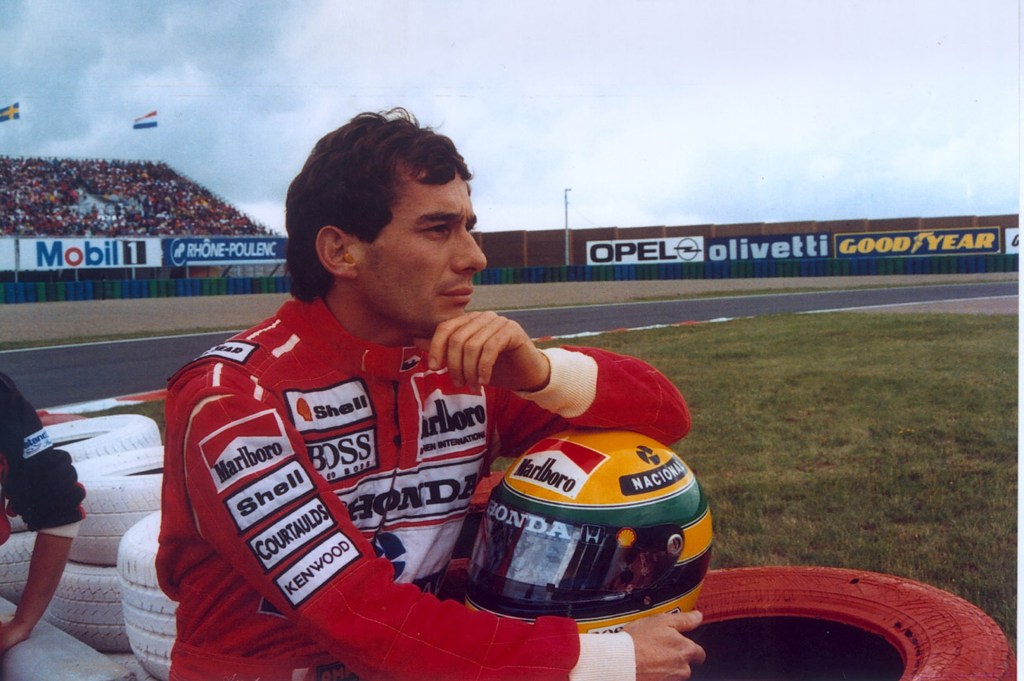
On another unrelated topic, last year (2024) marked the 30th anniversary of Ayrton Senna’s death. “Ayrton Senna from Brazil,” as the famous Brazilian commentator Galvão Bueno used to call him enthusiastically while narrating Senna’s Formula 1 performance, which kept all of Brazil glued to their TVs. Senna also influenced me greatly with the values he embodied: tenacity in the face of immense challenges, generosity and passion among many.

Now, here is where these seemingly unrelated topics come together.
The other day, after greeting my uncle for his birthday, I told him I had watched the Senna miniseries on Netflix. It reminded me of when we used to go to his parents’ house for the weekend and ended the day watching Formula 1 Grand Prix races, rooting for Senna.

He replied with a beautiful message that made me very emotional. He said he had also watched the series and that it reminded him of me. He recalled some episodes from when I was a kid—like how, while driving with me in the backseat about to fall asleep, he would say, “Look, there’s Senna out there!” and I’d wake up immediately, looking for Senna outside the window. I couldn’t remember that memory before he mentioned it, but it was so precious to me because I loved hearing my uncle’s laugh—always full of joy and childlike energy, despite his ability to make us all feel safe and protected.

Then, he reminded me of the day Senna died. It was one of the saddest days in Brazil’s recent history. As crazy as it may sound, you’d have to have been there in Brazil during those years to truly understand. My uncle told me that after learning the news, he came to check on me. We were going to his parents’ house that day, but when he found me, I already knew. We cried together in the elevator while getting ready. Now I remember that moment, though I didn’t before he brought it up. There are many moments of my childhood that I don’t remember—many happy ones.

I’m left with a question: Have I gone from Peter Pan to Peter Banning? Have I become an insensitive workaholic adult who’s lost his marbles and happy thoughts? Maybe, or maybe not. Perhaps Hook will come for me and take me back to Neverland. No! As usual, I’ll need to do the hard work of digging, understanding, and integrating to get there.  But once again, thanks to my uncle, Senna and Peter Pan, I’ve learned something important: it’s never too late to rediscover the joy and wonder we once held close.
Whether through reconnecting with loved ones, revisiting cherished memories, or embracing the values of our heroes, we have the power to reclaim our marbles and rediscover our happy thoughts.

#15 When stoicism turns sour – Part 1

The way I understand it, the Stoic approach teaches us to accept whatever comes our way with calmness, without compromising our values. And I think it’s a valuable way to see things. However, over time, I realized that this philosophy led me to focus more on the negative possibilities lying ahead rather than the positive ones. I started to picture worst-case scenarios to prepare myself to accept them beforehand. I kind of twisted Stoicism to my own disadvantage—DIY philosophy gone wrong, ouch!

Focusing on the gloomy side of things eventually drained me, and I didn’t even realize what I was doing until I pushed it too far. At first, I would comment on discussions, expressing mainly opinions on what could go wrong. When someone called me out for being pessimistic, I would correct them, insisting I was just being “realistic.”

But this mindset snowballed. I began developing irrational fears about even the smallest things. I became extremely controlling—of myself, my habits, my activities, the situations I put myself in, and the people I met. I built a pattern of suspicion toward literally everything, and over time, it became more and more ingrained in my system.

What’s fascinating to notice, though, is that at the same time this mindset was evolving, I became more organized and productive than ever—but with a cynical and detached attitude toward others. Strangely enough, in terms of my career, this period marked the most significant advancements. I felt a bit like one of those high-ranking professionals or “psychopathic CEOs” living in a bubble of strategic thinking, productivity, and metrics-driven values.

But this way of thinking wasn’t sustainable, at least not for me. I’ve always been a sensitive person, deeply connected to and attentive toward the people around me. This mindset was kilometers away from my core.

Worse yet, I lacked the self-compassion to understand where all of this was originating from. My default relationship with myself was rooted in self-criticism and intolerance. I couldn’t stand myself anymore. Things got even worse: I slowly became paranoid. I lost my courage and, to a certain extent, my curiosity to go out, discover new things, and meet new people.

It took me a while to realize these patterns, but when I did, thankfully, I understood I needed to hit the reset button. I had to start working on myself and make the necessary adjustments, whatever that meant.

I needed to heal. And for the person I was back then—diffident, suspicious, and pessimistic—that was a journey I could only embark on alone.

The first step I took was…

To be continued.