Tag Archives: Expectations

#69 Not everything needs to become a project

When I work a job that truly resonates with me, my creative resources evaporate during the workday. Acknowledging this now causes me less frustration than it used to in the past.

The alternative would be having a boring job that doesn’t spark my interest, so that my brain is not fully hijacked during the day and I’m left with something to dedicate to my evening passions. However, I am not a fan of that at all; spending nine hours doing something I don’t care about is torture—at least for me. After a while, I usually start to resent everything related to an unchallenging, uninteresting job.

I never seriously considered turning a passion into a project worth diverting all my focus and resources onto. The reasons are a mix of risk aversion, which characterizes me, and contentment with the life and hobbies I already have. Why complicate things by taking on projects I don’t feel genuinely moved or interested in? There was a time when this brought a degree of uncertainty, and from time to time I still reflect on similar topics. I’ve written before about moving forward without a clear destination, about repeated attempts that don’t crystallize into a single narrative of progress.

Questioning usually arises when I stop listening to myself and start listening to external noise instead. Not having a personal project—whether entrepreneurial, family-related, or centered on traveling the world—is often treated as a failure of direction, when in reality it can simply mean refusing to force coherence where none exists yet. My free time is spent on various hobbies rather than a single, defining goal. The things I do bring me joy and contentment.

What I do find overwhelming is the expectation that any meaningful interest should eventually turn into something bigger—more structured, more visible, more competitive. Especially today, when knowledge is widely accessible and comparison is constant, the bar for individual achievement seems perpetually raised, even in spaces that were once meant to be personal and restorative.

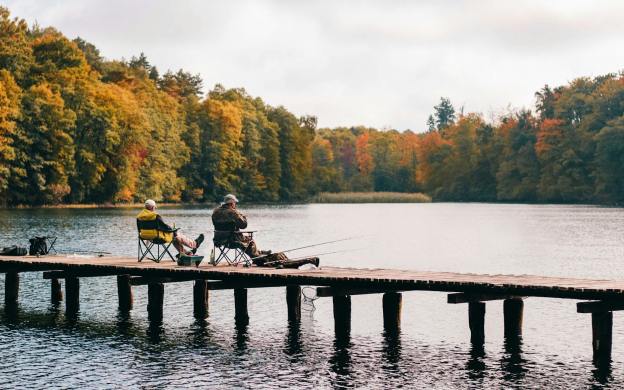
The best thing, perhaps, is not to lose one’s mind over this or that personal project, fueled by delusions of grandeur, external pressure, or whatever else creates a sense of urgency around self-realization. Instead, it’s to do something that simply brings us a bit of extra pleasure during our free time. As it used to be in the past: you would go fishing to spend time with friends over a beer, or alone to meditate, or simply to disconnect in nature—not to go fishing with the purpose of posting it on some random social media page. You would do it because you liked it and wanted it.

Over time, I’ve learned that the problem isn’t a lack of ambition, but a lack of gentleness. Toward time. Toward energy. Toward ourselves. Accepting that not every phase of life needs a defining project has been less about giving up, and more about staying sane and true to oneself.

It’s true, though, that this mindset is, at this stage, sadly collectively installed in our brains. The expectations one nowadays has about life are insanely unachievable within a single lifetime, and yet we collectively fall for them.

Maybe the quiet rebellion today is not to optimize every passion or turn every interest into a performance, but to allow parts of life to remain unproductive, unambitious, and ours alone.

#65 Expect the least from others and be amazed by what you find

Listen to this post

As far as I can remember, I’ve always been someone who expects a lot from others—too much, actually. But with time, I realized that these expectations disregard the humanness in us—our natural tendency to make mistakes as part of growth.

Growing up in Brazil, I was raised in a very controlled environment—so controlled that my childish mistakes were met with some form of punishment almost every time. Experimenting with freedom and without fear was difficult for me. Things improved when I moved to Italy, as Europe generally feels safer, but not by much. By the age of eighteen, for example, I had never been to a club, never drank alcohol, never even tried coffee—and on weekends, I still had to be home before 22:30. I had done many other debatable things, like punching other kids in the face when I felt they had crossed the line, but I eventually blacklisted that kind of behavior, too.

Before I realized it, my parents had given me a strong ethical foundation. I had a clear sense of right and wrong—at least from my own perspective. I won’t pretend I didn’t act hypocritically at times, bending the rules I had imposed on myself for personal advantage. Consciously or unconsciously, we all do that. Still, I had my own code of conduct. (As a side note, it always surprises me how strange some things sound when you write them down.)

Over time, that educational method bore fruit. I could focus on what mattered to me without distraction, and I was respected—admired even—for my integrity.

Nowadays, the kind of upbringing my parents gave me—filled with slaps, confinement, and, at times, beatings with a belt—would be completely unacceptable, at least here in Germany, where I currently live. I’m sure I would avoid any form of conscious physical or mental coercion if I were to become a father. However, it worked. And as strange as it may sound, I’m extremely grateful to my parents for that. I believe I was a tough kid, and they did what they could with what was available to them at the time.

The catch, though, is that I came to expect the same level of (self-perceived) integrity and moral drive from others. I simply couldn’t accept mediocrity as I defined it—and that soon led me into self-isolation.

It took me a very long time to understand that we are all different, that we should accept and even embrace those differences. Putting this into practice is still a work in progress, but I can confidently say I’ve improved since I began prioritizing this mindset, researching the topic, and working on myself.

I haven’t yet reached the harmony I desire in relationships. At the moment, I find myself in a phase where I expect the least from people I meet. It’s a way of tricking my brain into opening up more easily. But I’ve been pleasantly surprised by how much quality others can bring into our lives when we set the right boundaries and shape them consciously—when we stop projecting too much of our inner patterns onto the outside world and instead learn to embrace whatever it has to offer.

Expecting less from others doesn’t mean lowering your standards—it means freeing yourself from the illusion that people should act according to your script. When you release that weight, life becomes lighter, and genuine connections have the space to surprise you.