I started this blog on impulse. I’ve been experimenting with it for a few months now, but I still don’t have a clear idea of where I’m heading.
If I had a clear path for where to take this blog, I would narrow down the topic to something that really thrills me. But since that’s not the case, I decided to broaden it. I definitely want to keep writing about work, as I genuinely believe that in the society we live in, work defines our existence and who we are—whether we like it or not. Work propels everything around us; if we or our machines weren’t constantly working like little bees, our world would collapse. Yes, we should strive to improve work conditions and make them more sustainable, but we can’t stop working.
If you read any book, any short story, or watch any movie, work is always a pillar of the narrative. It defines characters, sets the scene, and shapes time and space—whether it’s in the background or at the forefront of the storytelling.
However, I don’t want to limit myself to writing only about what happens in my work life. I want to explore short stories, random reflections, and maybe even share one-paragraph posts inspired by things people tell me. And while I enjoy the topic of work, I won’t write solely about it.
I’m trying to step away from my usual control-freak tendencies, where I plan and define everything. Instead, I want to lose control and discover something unexpected and new.
With that in mind, I’ve decided to change the name of the blog from Work Thoughts to Beyond My CV. It aligns with my website name, fits the broader purpose, and creates a mini personal brand. Plus, someone else already has a blog called Work Thoughts, which annoyed me quite a bit.
When I started my new job last November, I thought I would have learned everything there was to know about the role very quickly, that I would have been speaking the smoothest German in no time, and that after a few weeks, I would be having promotion talks with my manager for my outstanding performance. I came from a very challenging position as a Senior Content Designer, handling the end-to-end content of multiple products in different languages for a tax-filing app. Whatever lay ahead of me, will not be more challenging than that. I thought. – Besides. – I said to myself. – It’s just a customer support role. How difficult can it be? Plus. – I concluded. – I am a senior professional with years of experience helping people understand complex topics easily.”
I can’t believe the size of the bait I took from my own ego. My arrogance, ignorance, and stubbornness were totally detrimental to me. On the outside, though, I was handling myself very well—I wore, once more, the shoes of a devoted student who’s fully dedicated to learning as much as possible and who’s very appreciative of the opportunity given, especially in these times when having a job feels more like a privilege than a human right. On the inside, feelings of dissatisfaction and frustration corroded me, as I secretly perceived this new beginning as a step back in my career—a feeling that got in the way of the smoother and more pleasant start I was so much looking for.
But paradoxically, what saved me from complete self-sabotage was exactly the intensity of the challenge I was facing, which stimulated my curiosity and willingness to overcome the obstacles and difficulties I encountered.
The first massive challenge I experienced was communicating with colleagues exclusively in German. The funny thing is that a German-speaking job was something I had been looking for since I moved to Germany, but achieving that isn’t simple. You need a good level of German to start from, and despite the hundreds of hours I had invested in courses, tandems, reading books, and watching movies in German, having a normally paced conversation at work is tough. You can’t really stop and ask people to repeat a sentence constantly.
The second challenge was learning new concepts related to computer networking, electronics, and many other technical topics fundamental to understanding the products and customers.
Finally, the third biggest and maybe most complex challenge is understanding the myriad of problems that customers face and learning how to guide them toward the best, most simple, and satisfying solution possible—all while avoiding taking anything personally and being a company cheerleader.
So how did I keep afloat during these first two months in this radical and challenging career change? How did I maintain my sanity while facing such a steep learning curve? Once more, acceptance and surrender really helped me. Understanding that I couldn’t have everything under control as I did after years of experience in other roles, and that I would struggle to communicate with my colleagues and clients in German, was truly like lifting a huge weight off my shoulders. I know that my German will suck for months until it doesn’t anymore; I know I won’t be in my comfort zone in terms of skills and knowledge until I will again; and I know I will struggle to solve most customer problems until I have mastered the most important of them.
Growth is less about perfection and more about perseverance. It’s more about embracing limitations and focusing on incremental improvements than setting flashy goals and unrealistic expectations. When we restart with a series of overwhelming challenges ahead of us, it’s really okay to feel uncomfortable, to struggle, and to sound silly while speaking a very complex foreign language—that’s learning right there, that’s growth right there! Nothing could be better than that.
Things take time, especially when there are big changes involved that we are not used to handling. But things are difficult until they aren’t anymore.
I’m really looking forward to seeing where I’ll be one year from now. At the same time, I want to exorcise from my future any freaking layoff shadow—even though now I know that I can overcome that too.
I had forgotten how, at the end of each day, work can deplete us of the energy to create anything beyond what we are expected to do at the office. This is not a complaint—it’s just an acknowledgment of reality. As I write these words, I’m squeezing my neurons to produce something meaningful, even though I know it might be a failed attempt.
I usually write my posts well in advance, which allows me to reflect on what I wrote and polish it if necessary. I focus on a specific topic that I’ve had in mind for a while, or sometimes on something that comes up spontaneously. Regardless, I usually schedule the post to be published on Fridays. Today, however, I’m writing a very spontaneous post on no particular topic, which I will publish immediately.
I’m not sure why I feel this need to justify myself—to whom? What I write is barely read by anyone. Even my girlfriend and a really good friend—whom I forced myself to send links to a couple of posts—aren’t particularly interested in my “work thoughts,” and honestly, I don’t blame them. This can be an exhausting topic and difficult to follow purely on a personal impulse, as I tend to ping-pong here and there without a precise plan, guided only by my love for writing. But I love it the way it is. I don’t seek much visibility; I really enjoy my “wannabe” blog/personal website that never quite takes off, with its occasional visitor who drops by briefly—and the rare reader who shows appreciation with a like.
I guess I’m not justifying myself but rather reflecting on this nonsensical train of thought on a very long and tiring Thursday.
There are a lot of topics I want to discuss in my future posts, including the following draft titles that I have in mind:
A good manager and a good team are the most important things in a job
Understanding that I can overcome any struggle helps with challenges (I think I will repeat this topic over and over, as it’s some sort of “resilience-building mantra” for me)
Perspective and free writing
How I use AI in my blog posts
Reflections on the end of the year: a tough one
So, for my courageous (or imaginary) readers, stay tuned, as 2025 is going to be filled with boring, probably badly written, and unexciting topics.
This morning, I experienced a typical Berlin mid-November scene: a tram packed with moody, wet adults, adolescents, and children on their way to work and school. The energy was subdued yet calming. Despite the lack of enthusiasm and excitement, there was a certain peace in the air. Everyone was minding their own business, respecting the unspoken agreement to keep conversations minimal. Heads were buried in screens, books, or gazing out of the window.
As usual, I took out the book I was currently reading and, within moments, was completely absorbed. The city noises, the smell of soaked bodies—all of it faded as I was drawn deeper into the story. The opening and closing of doors at each stop and the subtle shifts in the crowd barely registered as I turned page after page.
Then, the flow of the commute was interrupted. A woman with a bike entered the tram exactly where I was standing forcing me to make a couple of steps back and squeeze myself against a bench of strangers, including a tiny girl that had chosen a corner for herself to zoom out of the rest of the crowd. The woman with the bike pushed her way in, further jostling against the tightly packed passengers, risking injury to both children and adults standing shoulder to shoulder. Eyes turned toward her, expecting an apology, a conciliatory smile, or, better yet, her realizing the situation and stepping back out. But none of that happened. She stood there, straight and stiff, chin held high, exuding an air of entitlement I had rarely seen.
I noticed a baby seat attached to the back of her bike as she pressed a few children against the doors. The passengers, already drained and bracing for their day ahead, lacked the energy to challenge her behavior. It was simply too early for that. And me? I wouldn’t dare confront a mother during the morning rush in a city as ultra-feminist and politically correct as Berlin. Not a chance.
Still, like everyone else, I was irritated. The carefully curated, mid-November bubble of morning quiet had burst. The shared sense of empathy was gone, replaced by heavy sighs and exasperated glances as the tram carried us to the next stops.
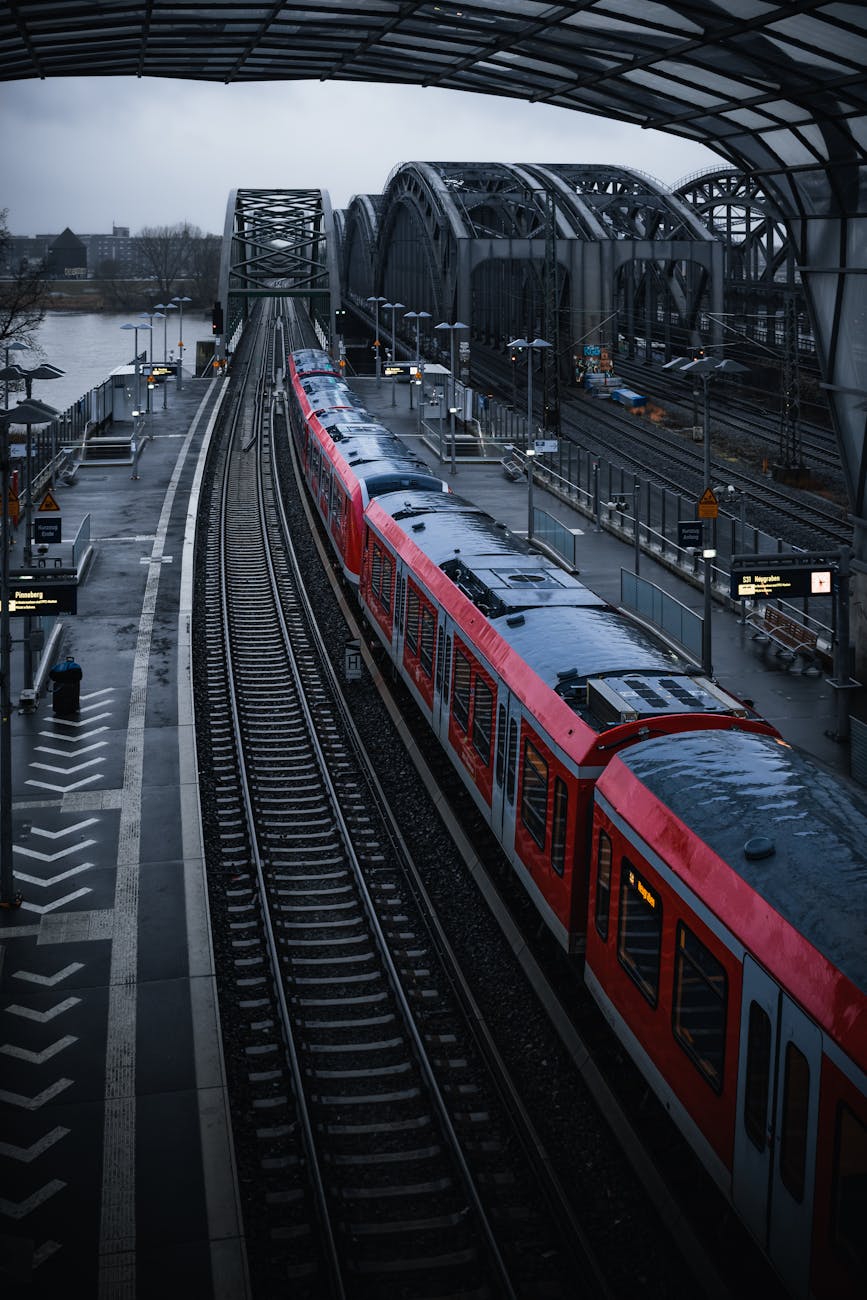
Finally, my transfer stop arrived. I crossed the street to the S-Bahn at Alexanderplatz, boarded the train, and reopened my book, ready to return to my story.
A month ago, I visited the Deutsche Kinemathek in Berlin with my girlfriend. As we wandered through captivating installations that depicted the history of German cinema, nostalgia crept in. I found myself reflecting on my bachelor’s studies in cinema—my attempts at directing short films, acting, writing screenplays, and so on. The feelings were pleasant at first, but soon I began ruminating on the trajectory of my professional life. I had moved from one job title to another, often viewing these shifts through a harsh, judgmental lens rather than appreciating them as part of my journey.
Instead of recognizing the value I brought to each role—my professional approach, strong work ethic, and endless curiosity—I focused on what I perceived as missteps. I overlooked the fact that I had become a content expert with a proven track record in customer satisfaction. That, in itself, is a significant achievement. It means I know my strengths and where I can contribute most effectively.
What I realized is that this way of thinking is common, perhaps even ingrained. After all, we set goals for ourselves and strive for continuous improvement. When we look back, we want to see a clear path of progress, not stagnation—or worse, regression. But here’s the crucial question: Is this need for progress real, or is it a projection of unrealistic societal values that have crept into our everyday thinking? I believe it’s the latter.
The pursuit of a “great” career, or simply a career, often masks a deeper need for stability—a need that is entirely human. But when this desire for stability becomes an obsession, to the point where we resent the ups and downs that shape our lives and define who we are, then there’s something wrong with the narrative we’ve internalized. This narrative, fueled by Western ideals of ambition and extraordinary achievements, often overlooks the importance of community, teamwork, self-compassion, and acceptance.
In the end, our careers aren’t always linear paths with clear milestones of success. They are filled with twists, turns, and moments of uncertainty. What truly matters is not how precisely we follow a predefined route, but how we adapt, learn, and grow along the way. By embracing self-compassion and accepting where we are—rather than constantly chasing where we think we should be—we give ourselves the freedom to explore new opportunities, evolve with our experiences, and build resilience. It’s in this acceptance that we find true empowerment, allowing us to navigate life’s ups and downs with grace, confidence, and a deeper sense of purpose.
There are many aspects to consider before moving to a new country or city. Right now, though, the list goes beyond the usual considerations like culture, language, lifestyle expectations, or city appeal. We are undergoing powerful transitions in society, technology, and geopolitics that could reshape our perception of the world for a long time. And it’s not just individuals who need to adapt; families, institutions, communities, and companies must also come to terms with what is happening now and what these changes will bring.
Leaving aside the topic of artificial intelligence—which is already having a major impact in ways we can hardly predict—there are other significant forces at play. For instance, there is a noticeable shift toward more conservative and right-wing policies, which are changing how societies think about immigration. In recent years, there was a wave of solidarity and openness toward migrants, but now a more pragmatic and less tolerant narrative is gaining ground. It’s happening so quickly that even people who previously found this kind of mindset unthinkable are now aligning with it.
Wars are breaking out in various regions, directly threatening Europe’s stability. The conflict in Ukraine has already had far-reaching consequences, with economic sanctions, energy crises, and shifting military strategies impacting countries across the continent. Meanwhile, China’s booming exports of electric vehicles are challenging Germany’s longstanding dominance in the automotive industry, sending shockwaves throughout Europe. The country that once set the benchmark for car manufacturing is now grappling with the pressure to innovate and stay competitive in a rapidly changing market.
These developments stir up fear, and fear often leads to a desire for strong leadership. This dynamic can pave the way for leaders who use nationalism and populist rhetoric to appeal to people’s insecurities. When a society starts to retreat into itself, valuing national pride over openness, the consequences can ripple through everyday life, influencing social interactions, job opportunities, and even cultural trends.
Here in Berlin, for example, I’ve noticed a shift toward a more conservative mindset. While there are still job opportunities, they are increasingly more accessible to locals or, at the very least, to those who speak the language fluently. The city’s diverse and international reputation is still alive, but the job market is no longer as accommodating to newcomers who lack strong German language skills. As companies face economic uncertainties, they prioritize candidates who can quickly integrate into the workplace culture and communicate seamlessly with customers and colleagues.
Moreover, the country’s economy is struggling to regain its footing amid global challenges. The energy crisis sparked by the war in Ukraine, combined with the disruption of the automotive industry by Chinese competitors, is creating a perfect storm of economic pressure. Inflation remains a concern, with rising living costs eroding the quality of life for many residents. For those considering a move to Germany, especially without a clear professional path or language skills, this might not be the best time to take the leap.
Germany’s situation serves as a reminder that the global landscape is shifting. What was once a relatively predictable place for career growth and stability is now part of a broader trend toward economic protectionism and social conservatism. The conditions that made it an attractive destination are changing, and anyone contemplating relocation should weigh these factors carefully.
It is important to acknowledge the complexity of this topic, as there are many other historical, economic, and social dynamics that I have not addressed here. This post is not an attempt to exhaust the subject but rather a personal reflection to make sense of what’s going on in these uncertain times.