Here I pause to think out loud. From societal questions to inner transformations, these entries explore ideas, emotions, and contradictions — with no need for perfect conclusions. It’s where thought meets feeling.
Works from others that we may utilize—like photos, quotes, videos, and so on—don’t become our own just because we repost them. Sounds obvious, but in today’s world… I don’t know, man, I think it’s always worth stating the obvious, even at the cost of sounding redundant.
So yes, this general copyright rule applies here as well: one should always quote someone else’s work—always!
Then there’s the AI topic, which complicates things a little. Without diving into specifics about jurisdictions and what different countries allow, I’ve gathered from some sources I’ve consulted that AI use is permitted as long as it’s not used for major modifications or to generate content from scratch. Which absolutely makes sense to me.
As long as we use tools like ChatGPT, Grammarly, and DeepL to correct grammar and improve clarity, it’s fine. It’s like having a personal proofreader at your disposal, which speeds up the process. And that’s the coolest part of these tools. Even though, to me, they’re the most diabolic invention ever; but I don’t want to unpack this topic. It’s just depressing, especially for us creatives… But hey, the proofreader part is pretty cool. I know this sounds inconsistent and opportunistic, but one has to adapt somehow.
So, to conclude: the original content we publish on our blogs—articles, essays, poetry, short stories, novels, photos, illustrations, videos, audio; in general, any creative piece of work originating exclusively from our own brain that doesn’t plagiarize existing material or wasn’t generated from scratch by a freaking AI tool—is ours. A bit like it would be if it were published by a traditional editor (for writers)—with the pro that there’s no transfer of rights, and the con that we make zero money from it. If you do (make money), please share some tips—hehe. The right to reproduce the work, distribute it, display it in public, create derivative works, and so on, belongs to us—the creators who published it on their own page.
Another thing to keep in mind is to display a copyright notice on your website, like I did on my homepage (BLOG). It’s an extra layer—a bit like a bulletproof vest working as a disclaimer—which could offer additional protection in case of a dispute.
There are endless sources on this topic out there, and it’s a complex one since international law is involved. If you’re an expert on this topic, please feel free to call out any bullshit I may have said—or share any useful tips or insights that could be helpful for the community.
I suppose we learn how to handle death, in practical terms, only when someone close to us—someone we are responsible for—dies. Then, we learn what to do to manage this unavoidable situation that each and every one of us will sooner or later experience, whether in first person or as observers.
Death is a topic on which I have reflected countless times. Like everyone on this planet, I have lost relatives and friends. But most of all, growing up in a small town in the north of Italy with a very old population, I witnessed on a weekly basis some aspects of the death of people I was acquainted with. We would hear the dramatic sound of the church bell’s gongs announcing someone’s death and then try to figure out who had passed away. “Davide died, you know? The grandfather of Giulia, the girl your cousin doesn’t get along with,” someone would say, for example. Then a few days would pass until the funeral procession, during which the relatives of the deceased would walk the silenced streets of the town with the funeral bier on their shoulders, followed by friends, until they reached the cemetery. But I was always clueless about the details of how to practically handle someone else’s departure from this world—and, honestly, it didn’t interest me at all.
I started to indulge in this morbid subject after reading the novel Of Fathers and Fugitives by J.S. Naudé. In this book, the protagonist, Daniel, a queer South African writer living in London, goes through a series of experiences in which, at each stage, someone dies—and Daniel ends up being responsible for arranging their funeral.
There are three main scenarios of “regular” death that can occur: death in your country of residence, death abroad, and the death of a baby or a child. Daniel goes through all three major cases, for which, as far as I understand, proceedings vary.
For the sake of length, I will just try to imagine a “normal” death circumstance and outline what the main steps might be, assuming this would be the simplest and least emotionally involved scenario possible.
Let’s assume we recently moved into a shared apartment. One day, we come back home and find our flatmate lying on the floor; a glass of red wine spilled, leaving a stain on the carpet a few centimeters from their hand. “Mike?” we say, expecting Mike to wake up from a random, early hangover. But Mike doesn’t move. As we get closer to the body, we notice that his eyes are open, his pupils in absolute stillness, his skin pale in an unnatural way.
After a moment of terror, we try to understand what to do next. We’ve seen enough crime series to know we shouldn’t touch either the body or the glass of wine—our fingerprints could incriminate us if, following an autopsy, it turns out Mike was the victim of a crime. So we reach for our phone to contact the authorities. What’s the ambulance number? Or should we call the police? Big doubt… OK, let’s go with the police. But again—what’s the number? 112, 113, 118, or 911? It can’t be 911—that’s from American movies. Let’s go with 112.
The person on the line introduces themselves, but we’re still in a state of shock and don’t really know who’s speaking. As the conversation with the doctor, nurse, or whoever continues, they ask a few questions to which we reply with a simple “I don’t know.” They ask if the person shows any signs of life. “No, they are definitely dead—their eyes have been wide open since I came back, they haven’t moved, they’re pale like white paper.” Then they start giving us practical instructions, and we become more receptive.
We’re told to wait for someone from the authorities to show up. It will take up to half an hour. They also stress that we should avoid touching anything at all, as it could interfere with a potential investigation.
After a moment of cooling down, the authorities arrive. For some reason, we feel agitated again. They behave in a strange way—they’re neither comforting nor accusative. They’re just very pragmatic, as if they’ve done this a thousand times before. They ask a lot of questions: which room is Mike’s, his contact details, where we were before coming home, and so on. They suggest we take a few days off and contact someone who can support us.
They spend quite some time taking pictures and notes, and after an hour or so, they leave—with Mike wrapped in a white bag.
We stay in a weirdly empty apartment. And now?
Now, Mike’s closest family members are contacted and notified of his death. The first thing they have to do is obtain a death certificate, usually issued by a doctor or coroner.
The death certificate is essential for all the proceedings that follow, up until the execution of the will—if there is one. Even if you die young or unexpectedly, or if you have no belongings or wealth other than a few thousand euros, a death certificate is still required. It’s one of those things you don’t realize you need—until you do, even if you’re no longer alive to care!
While researching this, one thing that surprised me was that upon freezing the bank accounts, no money can be withdrawn—unless it’s a joint account or the deceased specified that the account should be payable to someone. Otherwise: bye-bye money—it all goes directly into the state’s pockets. One last tax payment!
Of course, upon notification, the employer stops the salary. Some employers claim to help family members resettle afterward, though I would take those promises with a grain of salt. In the end, it all comes down to contracts, signatures, and what was agreed upon when the employment contract was sealed.
The apartment. Mike didn’t own it, so his family just needs to notify the landlord. Let’s assume he hadn’t paid rent for a few months, which might partly explain his early, random hangover: debts are also settled by the state—so that’s other people’s taxes covering this, I guess?! Survivors are not liable… unless they co-signed a loan or had a joint account. So, think twice before doing either of those things with your partner. The relationship has to be built on solid grounds of honesty.
I’m sure I haven’t included many things here. But again, I’ve never been through such a situation. The truth is though, that the systems we rely on reduce life to paperwork, processes, and final payments. And yet, understanding these systems—even hypothetically—can give us a strange sense of preparedness, and maybe, even a little control in the uncontrollable.
One thing I am sure is incredibly important to keep in mind—during, and even years after—is the need for emotional and mental support, whether through our community or professionals. Some people’s lives are so intertwined with another’s that they’ve completely forgotten what it means to live alone—emotionally, financially, or otherwise.
When choosing a book, I always follow the same approach: I read the first ten pages, a few pages in the middle, and one toward the end. If they leave a positive impression, I buy the book—regardless of the topic.
Applying this strategy, no book has impacted me as deeply as Les Enfants Endormis by French author Anthony Passeron. The evening I discovered it in the library, I had an appointment with my girlfriend. It was hard to explain why I hadn’t heard my phone—why I missed her messages and calls while she wandered around the library looking for me.
The book has an original structure: one chapter focuses on a global topic—the rise of the HIV/AIDS crisis—while the next centers on the author’s family, who suffered multiple losses due to the epidemic. These two storylines alternate chapter by chapter, each unfolding along the same timeline.
I loved how thoroughly researched the chapters on HIV were. Passeron presents complex medical and historical information in a concise, objective, and accessible way. The chapters about his family, by contrast, are intimate, emotional, and beautifully written.
I believe simplicity in writing is a form of mastery. Passeron manages to combine emotional depth, knowledge, and elegance with clear, unpretentious prose. That, to me, is the pinnacle of writing.
The book is about two hundred pages long, and when I finished it, I felt that every word had been carefully chosen. Nothing was superfluous, and nothing was lacking. It was just enough.
Imagine you’re having a conversation with someone. You’ve been exchanging intimate details about your lives, and you feel safe enough to share something deeply vulnerable, like:
“My mother died of cancer when I was ten. I still feel an emptiness when thinking about it.”
But to your astonishment, the other person replies:
“Still? After all these years? Come on, you gotta move on!”
I bet you’d feel hurt, confused, and would react with the typical fight, flight, or freeze response. You might take it personally and decide never to share anything with that person again. Correct?
When we open up to others, we must accept that vulnerability comes with risk—of criticism, misinterpretation, unsolicited advice, or outright dismissal. A conscious approach, though, isn’t always possible; sometimes we’re just flowing through a conversation. But ideally, we should learn to protect ourselves in any circumstance.
In a perfect world, this vulnerability would be met with empathy, compassion, maturity, and intuition—elements that create a safe space for intimate connection. But as we know, the world is far from ideal.
That said, no meaningful relationship—of any kind—exists without occasional disappointment. We tend to expect more from those we allow close to us, but expectations often undermine relationships, just like comparison robs us of happiness. We must remain rooted in ourselves, closer to our inner compass than to the urge to close gaps with the people around us. And it’s our responsibility to shape communication in ways that feel safe and respectful for all parties—through honest expression, clear boundaries, and mutual understanding.
The ability to shape a relationship should go hand-in-hand with choosing them wisely: developing the sensitivity to recognize early on which people will require the least emotional effort to maintain healthy communication.
Still, we may go through periods where solitude feels like the better choice. Not because we reject connection, but because we’re exhausted—tired of investing in yet another relationship or friendship that drains us. Even then, we must sit with our inner demons—grappling with thoughts of the past, present, and future, and confronting the psychological obstacles our mind constantly elaborates.
There are also those moments when life seems to place only annoying or immature people in our path. And let me be clear: I’m not here to criticize such people. I’ve been that person. You’ve probably been that person. Humility and the awareness that we’re all works in progress can help not just us, but others too.
One small, recurring thing I try to do when I feel hurt, misunderstood, dismissed, or belittled in a conversation is to take responsibility for my feelings. First, I examine where they come from. Then I try to empathize with the other person—to understand what might have triggered their reaction. Sometimes, for example, people simply feel like shit and alone, and they want to drag others into their misery. It may be unconscious, but it’s still a mechanism—a pattern they’ve been repeating for a long time.
So the next time we find ourselves opening up, revealing intimate details, and receiving an offhand comment or a dismissive silence in return, we can try a simple practice: pause and identify the feeling the other person’s behavior triggered in us, then express it. A sentence like:
“When you dismissed what I said about how my mother’s death still makes me feel, I felt sad.”
is already a meaningful first step. It sounds simple, but it’s one of the hardest things to do in relationships—because most of us react to feelings instead of sitting with them, and finding the courage to acknowledge them to ourselves and share them with others.
If this sparked your curiosity, I encourage you to read Nonviolent Communication: A Language of Life by Marshall B. Rosenberg and A New Earth by Eckhart Tolle. These were two fundamental books for my development and growth over the last years.
As we advance through life and its various phases, we evolve into something entirely different from what we initially were. Without acknowledging that change, we often forget what we used to be like as children. It’s difficult, though, to look back at our past objectively—we tend to use those memories to justify who we are today, rather than seeing them simply as integral parts of our journey.
Personally, I fluctuate between different emotional states when thinking about my past. Some memories I enjoy indulging in; others, I’d rather forget. However, when I think about the child I used to be—rather than specific events—everything becomes softer, more comfortable. I don’t mind stepping into that skin again. I still find myself in that child’s essence—not in their behaviors, but in their core, which remains a familiar and safe place.
Chaos, imagination, belonging
Until I was about seven, growing up in the high-crime Salvador of the 90s with a single mom, I spent most of my time confined within our residential building.
Aside from sporadic visits to my cousins or my mom’s friends’ kids, my daily social life revolved around that building. With only three children, including me, it was hardly a playground. The other two were brothers, so I wasn’t really part of their dynamic. In other words, I didn’t have much of a social life outside of school, weekends, and holidays.
After doing my homework, I would go kick a ball against the wall in the building’s garage—an underground block of cement with no trees and only a sliver of sunlight for a few hours a day. I had no dreams of becoming a Bebeto or Romário like the other kids. Hitting the ball against the wall just helped me release some stress, I suppose. On the few occasions I left the building for groceries, I got robbed. Once, I was even assaulted at knifepoint and returned home shirtless, stripped of a brand-new baseball cap I had received for Christmas. It may sound traumatic, but back then, everyone I knew had a similar story—whether kids or adults. Robbery was a disturbingly normalized part of our society.
Despite the repetitive, limited, and at times dangerous routine, I remember being a happy kid. I was alone most of the time, but I didn’t mind. I don’t recall ever begging my mom to take me to see people—maybe I did, I’m not sure. What I do remember is asking to go see a movie, buy a comic book, a toy, or a new set of colored pencils. I was really good at entertaining myself with drawing and reading. I also had strange little habits that excited me beyond reason—like memorizing the names of the cars parked outside our gate, which I would stare at for hours from our window while waiting for my mom to return from work. I guess boredom forced me to invent ways to stay entertained.
Whenever I did meet my cousins, I tried to make the most of it—even if that meant doing unusual or dangerous things. I had a constant urge to compensate for the apathy of my day-to-day life. I frequently joined street fights, often ending up beaten, as I tended to challenge older, bigger kids to heighten the adrenaline rush I craved. I would jump off cliffs, swim in stormy oceans, explore abandoned caves and cemeteries, break into buildings or stores just to steal something random. When caught, I’d deny everything with the most bizarre, creative lies imaginable.
Daring and breaking the rules meant being alive. It was my way of affirming that I existed. That need was likely unconscious at the time, but I can’t justify it any other way now.
I have to admit—I loved inventing stories, even if it drove my mom mad. I was always around when crazy things happened, partly because I had a knack for being in the wrong place at the right time, and partly because I was always nosing into other people’s business to compensate for the dullness of my life. I collected wild anecdotes and shared them with others, but I couldn’t help spicing them up. I’d exaggerate just enough to make the stories unbelievable—but I’d tell them with such enthusiasm that people began to believe them.
Once, while playing my car-memorization game, I saw a car crash right in front of our building. It was bad. The woman in the back seat of one of the cars lost consciousness and never woke up. The driver stumbled out, blood covering his face, shouting random nonsense. When my mom got home, I told her a kid had been catapulted from the car (there were no children involved), and that the driver had lost an arm and was screaming in a foreign language.
It’s hard to explain how often bizarre things happened around me. My cousin once threw a rock at a beehive and nearly died from the stings. I saw a girl drown in a stormy ocean. A friend broke his jaw and lost most of his teeth in a skating accident. I saw a gang fight. A gang member once let us hold his gun. And so on. Eventually, I began normalizing—and even seeking out—chaotic experiences. It’s no surprise my favorite movie genre was horror, which, I’m sure, made my mom question my mental health from time to time, though she often found it funny.
A different reality
What I sometimes observe is that my childhood gave me a constant state of alertness that still follows me, even after being “Europeanised”—used to a much less abnormal routine. I still double-check dark corners before walking through them, take wide turns, and instinctively keep my distance when a stranger approaches out of nowhere. The sound of fireworks? My first thought is gunfire.
By the time we moved to Italy, my childhood had already taken some wild twists. I had spent a year and a half living with my aunt and uncle, and their building was a treasure trove of experiences—a wonderland of children hungry for adventure. I bonded with them and collected a new set of PG-13, not-so-recommendable experiences. When I arrived in Italy, I was reactive, restless, troublemaking, and unreliable. My background didn’t match European standards—especially not those of the small town I ended up in. The integration process, both inside and outside my family, was difficult. I’ve talked about this in previous posts, and the re-education process was anything but easy. But that’s a story to dive in again another time.
There are parts of ourselves we hide to fit into the world. That’s a pity. When we’re in touch with who we really are, we know what we want and how to live in alignment with our core. Otherwise, we end up living someone else’s life. And that makes a huge difference. We are all a mixture of light and darkness, good and evil, boredom and excitement—whatever those words evoke in us. We do need to coexist with others, but before that, we need to exist in peace with ourselves and accept who we truly are.
Freedom: the condition or right of being able or allowed to do, say, think, etc. whatever you want to, without being controlled or limited.
Freedom for basic rights
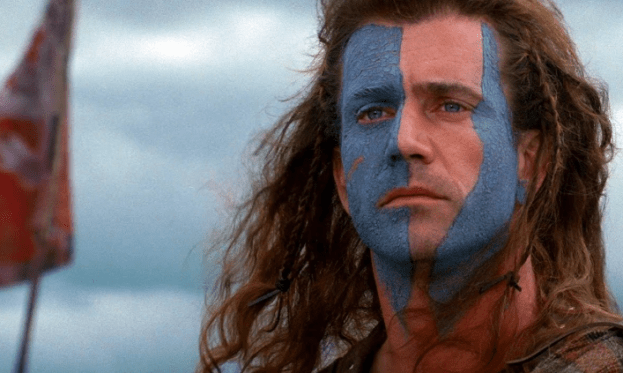
“Freeedoooom,” screams William Wallace at the end of the movie Braveheart, while English executioners tear his body apart during a prolonged torture before finally chopping off his head. In the movie, based on a real story, Wallace fought to avenge the murder of his bride and for the freedom of Scotland.
The LGBTQ+ community is seeing their basic rights being repressed in Hungary (most recently a ban on the Pride parade under the guise of child protection—while neo-Nazi demonstrations are permitted—doesn’t bode well for this year’s Pride in June. Expect headlines about a harsh crackdown by the Hungarian government). This follows the Russian-style “putinization” supposedly aiming to restore or protect what some define as “conservative values.”
Ukrainians first fought to defend themselves from an invader, then were deluded by Western puppet masters into pursuing a war to defeat Russia. Now, they are being manipulated again—this time by what appears to be a Trump-Putin quasi-alliance, excluding Ukrainians from any real negotiations. Meanwhile, tens of thousands of men and women have lost—and continue to lose—their lives on the battlefields.
Investigations by international NGOs such as Human RightsWatch and Amnesty International have concluded that Israel is committing acts that amount to genocide against Palestinians. The word genocide is one that makes one flinch—especially when viewed through the painful paradox of Jewish history just 80 years ago. Meanwhile, Palestinians have been systematically denied a voice in much of the Western media, where coverage often remains apathetic, reduced to daily death tolls that now consist almost entirely of civilians.
But what we’re really witnessing is a clash of ideologies and propaganda that we’re all severely subjected to, often forced to take a side in every situation, whether we want to or not. We are like cows, completely submitted to the will of governments, corporations, organizations—masters who have full control over our lives as a collective. In fact, I would go as far as to say that we do not exist collectively outside the context of these institutions. Is it bad? Is it good? No idea. Maybe it’s brought more good than harm—after all, organizing eight billion humans any other way might be impossible.
An age of confusion
From one perspective, the restriction of freedom arises from fear. Fear leads to a utopian attempt at control. And control eventually backfires, giving rise to reactionary forces and movements that can themselves become radicalized. The clearest historical example: fascism and Nazism rising in the 1920s in reaction to communism and the form it had taken at the time.
When ideology proliferates and takes over rationality and critical thinking, the soil becomes fertile for dictatorial practices. Take Western moral hypocrisy—we’ve been brainwashed for years into believing that Western governments are ethically driven, morally superior, and paradoxically “blessed” with the lessons learned from past horrors: colonialism, the Inquisition, concentration camps, gulags, and more. We’ve been convinced of this narrative so thoroughly that we can no longer distinguish good from evil in a world where everyone believes they are on the “right” side.
Need for freedom
So, if collective freedom depends so much on rules, ideologies, and cultural practices—are we at least freer on an individual level?
I would argue we are not. The main reason: our actions have consequences. No matter the society, the community, the family, or the relationship—we live by a set of rules that limit our individual actions. To be truly free, one must be willing to accept the consequences of their actions. That’s where ethics, values, and education come into play. To what extent we’ve been taught to respect (or disregard) rules and others makes a huge difference in our lives.
Expectations through changes
And that’s where expectations come in—when we enter a relationship, start a new job, or move to a new city or country—and reality smacks us in the face. A process begins: we polish our behavior and adapt our values to fit the new environment. In doing so, we also discover which values we’re unwilling to compromise.
We swing like a pendulum between extremes: sometimes excited by change, sometimes completely frustrated or suffocated by it. That’s when tolerance, experience, and empathy become essential. The ability to accommodate each other’s differences while preserving respect for our own backgrounds and values is a difficult job—but not impossible.
Everything changes in this process, leading us down new and unknown paths, which naturally freaks us out. Then we swing back to the other extreme, trying to control things to reestablish balance, calm, and order—before opening ourselves to the next wave of novelty.
If we pay attention, we’ll see this pattern not only at the individual level but also collectively. The real danger is when we freak out too much—and lose our minds.