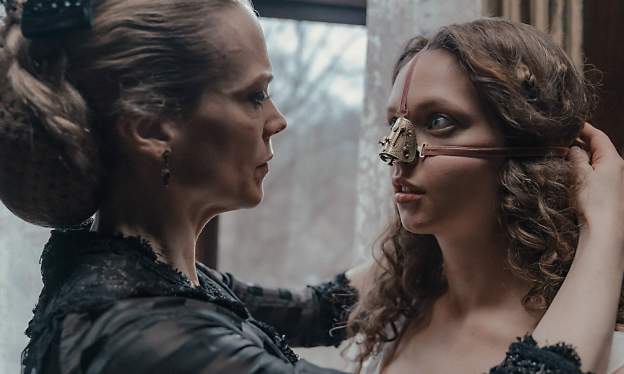
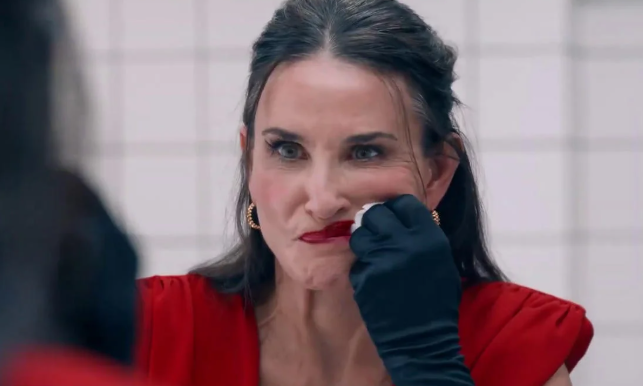
Two movies that, in my opinion, encapsulate one powerful aspect of our society in a masterful way: looks can get you far, but depending on them will destroy you—inside and out. In a world increasingly bombarded by an overwhelming storm of video content—much of it led by anyone with a phone who steps into the debatable role of “influencer”—our independent will and decision-making capacity seem to be vanishing. This leaves a dangerous vacuum where ethically grounded, far-sighted, and morally sound role models are missing.
Obviously, these movies are much more than that. As with any work of cinema, each viewer interprets the story and characters differently. Other themes stood out to me strongly: the comparison trap and the lack of contentment—even when one reaches personal goals. These were portrayed both implicitly and explicitly, reflecting the collective and individual psychosis we are experiencing today and the path toward oblivion we seem to be heading down.
Our capacity for monstrous actions is never pleasant to witness, nor something we enjoy indulging in for too long. Yet acknowledgment is always the first spoonful of medicine we must swallow to begin changing certain patterns, whether individually or collectively. It’s true, though, that there’s a time for acknowledgment—and perhaps we’re not there yet. I see more and more people around me choosing to ignore these realities and retreat into their own personal La La La Lands. I say this in the least judgmental way possible. As beings deeply connected to what happens around us, unless we cultivate a degree of detachment, objectivity, and realism, examining our problematic self too closely can easily overwhelm us. That’s why movies like The Substance and The Ugly Stepsister can be so powerful: they compel us to take a deep, unavoidable look at our collective insanity.
I realize I’m talking about these movies without really talking about them—but isn’t that often what happens after we leave the cinema? Whether we’re alone or in company, good films help us reflect on something deeper, and that reflection can linger for days, weeks, even months.
I usually sympathize with both the villains and the heroes in films—unless they’re mere propagandistic caricatures, created to implant prefabricated notions of good and evil. One major takeaway for me comes from the character of Agnes, portrayed by Thea Sofie Loch Næss in The Ugly Stepsister. Throughout the entire film, which spans several years, she resists her diabolically jealous stepsister Elvira’s (played by Lea Myren) attempts to undermine her beauty, intellect, maturity, and wisdom. Agnes knows who she is and stays true to her deepest values, no matter what. And it doesn’t matter whether she ends up triumphant or not—what matters is that she remains connected to her identity, even as the world around her falls apart.
Elvira’s arc is equally powerful. It shows that no matter how far we’ve fallen, how deep we are in the hole, or what atrocities we’ve committed, there is always a way out. There is always a path to redemption—even when nobody believes we deserve it, and even when the consequences of our actions may follow us for the rest of our lives. Again, it all starts from within: from putting our pieces back together and allowing ourselves to walk the path of self-forgiveness.
Works from others that we may utilize—like photos, quotes, videos, and so on—don’t become our own just because we repost them. Sounds obvious, but in today’s world… I don’t know, man, I think it’s always worth stating the obvious, even at the cost of sounding redundant.
So yes, this general copyright rule applies here as well: one should always quote someone else’s work—always!
Then there’s the AI topic, which complicates things a little. Without diving into specifics about jurisdictions and what different countries allow, I’ve gathered from some sources I’ve consulted that AI use is permitted as long as it’s not used for major modifications or to generate content from scratch. Which absolutely makes sense to me.
As long as we use tools like ChatGPT, Grammarly, and DeepL to correct grammar and improve clarity, it’s fine. It’s like having a personal proofreader at your disposal, which speeds up the process. And that’s the coolest part of these tools. Even though, to me, they’re the most diabolic invention ever; but I don’t want to unpack this topic. It’s just depressing, especially for us creatives… But hey, the proofreader part is pretty cool. I know this sounds inconsistent and opportunistic, but one has to adapt somehow.
So, to conclude: the original content we publish on our blogs—articles, essays, poetry, short stories, novels, photos, illustrations, videos, audio; in general, any creative piece of work originating exclusively from our own brain that doesn’t plagiarize existing material or wasn’t generated from scratch by a freaking AI tool—is ours. A bit like it would be if it were published by a traditional editor (for writers)—with the pro that there’s no transfer of rights, and the con that we make zero money from it. If you do (make money), please share some tips—hehe. The right to reproduce the work, distribute it, display it in public, create derivative works, and so on, belongs to us—the creators who published it on their own page.
Another thing to keep in mind is to display a copyright notice on your website, like I did on my homepage (BLOG). It’s an extra layer—a bit like a bulletproof vest working as a disclaimer—which could offer additional protection in case of a dispute.
There are endless sources on this topic out there, and it’s a complex one since international law is involved. If you’re an expert on this topic, please feel free to call out any bullshit I may have said—or share any useful tips or insights that could be helpful for the community.
I suppose we learn how to handle death, in practical terms, only when someone close to us—someone we are responsible for—dies. Then, we learn what to do to manage this unavoidable situation that each and every one of us will sooner or later experience, whether in first person or as observers.
Death is a topic on which I have reflected countless times. Like everyone on this planet, I have lost relatives and friends. But most of all, growing up in a small town in the north of Italy with a very old population, I witnessed on a weekly basis some aspects of the death of people I was acquainted with. We would hear the dramatic sound of the church bell’s gongs announcing someone’s death and then try to figure out who had passed away. “Davide died, you know? The grandfather of Giulia, the girl your cousin doesn’t get along with,” someone would say, for example. Then a few days would pass until the funeral procession, during which the relatives of the deceased would walk the silenced streets of the town with the funeral bier on their shoulders, followed by friends, until they reached the cemetery. But I was always clueless about the details of how to practically handle someone else’s departure from this world—and, honestly, it didn’t interest me at all.
I started to indulge in this morbid subject after reading the novel Of Fathers and Fugitives by J.S. Naudé. In this book, the protagonist, Daniel, a queer South African writer living in London, goes through a series of experiences in which, at each stage, someone dies—and Daniel ends up being responsible for arranging their funeral.
There are three main scenarios of “regular” death that can occur: death in your country of residence, death abroad, and the death of a baby or a child. Daniel goes through all three major cases, for which, as far as I understand, proceedings vary.
For the sake of length, I will just try to imagine a “normal” death circumstance and outline what the main steps might be, assuming this would be the simplest and least emotionally involved scenario possible.
Let’s assume we recently moved into a shared apartment. One day, we come back home and find our flatmate lying on the floor; a glass of red wine spilled, leaving a stain on the carpet a few centimeters from their hand. “Mike?” we say, expecting Mike to wake up from a random, early hangover. But Mike doesn’t move. As we get closer to the body, we notice that his eyes are open, his pupils in absolute stillness, his skin pale in an unnatural way.
After a moment of terror, we try to understand what to do next. We’ve seen enough crime series to know we shouldn’t touch either the body or the glass of wine—our fingerprints could incriminate us if, following an autopsy, it turns out Mike was the victim of a crime. So we reach for our phone to contact the authorities. What’s the ambulance number? Or should we call the police? Big doubt… OK, let’s go with the police. But again—what’s the number? 112, 113, 118, or 911? It can’t be 911—that’s from American movies. Let’s go with 112.
The person on the line introduces themselves, but we’re still in a state of shock and don’t really know who’s speaking. As the conversation with the doctor, nurse, or whoever continues, they ask a few questions to which we reply with a simple “I don’t know.” They ask if the person shows any signs of life. “No, they are definitely dead—their eyes have been wide open since I came back, they haven’t moved, they’re pale like white paper.” Then they start giving us practical instructions, and we become more receptive.
We’re told to wait for someone from the authorities to show up. It will take up to half an hour. They also stress that we should avoid touching anything at all, as it could interfere with a potential investigation.
After a moment of cooling down, the authorities arrive. For some reason, we feel agitated again. They behave in a strange way—they’re neither comforting nor accusative. They’re just very pragmatic, as if they’ve done this a thousand times before. They ask a lot of questions: which room is Mike’s, his contact details, where we were before coming home, and so on. They suggest we take a few days off and contact someone who can support us.
They spend quite some time taking pictures and notes, and after an hour or so, they leave—with Mike wrapped in a white bag.
We stay in a weirdly empty apartment. And now?
Now, Mike’s closest family members are contacted and notified of his death. The first thing they have to do is obtain a death certificate, usually issued by a doctor or coroner.
The death certificate is essential for all the proceedings that follow, up until the execution of the will—if there is one. Even if you die young or unexpectedly, or if you have no belongings or wealth other than a few thousand euros, a death certificate is still required. It’s one of those things you don’t realize you need—until you do, even if you’re no longer alive to care!
While researching this, one thing that surprised me was that upon freezing the bank accounts, no money can be withdrawn—unless it’s a joint account or the deceased specified that the account should be payable to someone. Otherwise: bye-bye money—it all goes directly into the state’s pockets. One last tax payment!
Of course, upon notification, the employer stops the salary. Some employers claim to help family members resettle afterward, though I would take those promises with a grain of salt. In the end, it all comes down to contracts, signatures, and what was agreed upon when the employment contract was sealed.
The apartment. Mike didn’t own it, so his family just needs to notify the landlord. Let’s assume he hadn’t paid rent for a few months, which might partly explain his early, random hangover: debts are also settled by the state—so that’s other people’s taxes covering this, I guess?! Survivors are not liable… unless they co-signed a loan or had a joint account. So, think twice before doing either of those things with your partner. The relationship has to be built on solid grounds of honesty.
I’m sure I haven’t included many things here. But again, I’ve never been through such a situation. The truth is though, that the systems we rely on reduce life to paperwork, processes, and final payments. And yet, understanding these systems—even hypothetically—can give us a strange sense of preparedness, and maybe, even a little control in the uncontrollable.
One thing I am sure is incredibly important to keep in mind—during, and even years after—is the need for emotional and mental support, whether through our community or professionals. Some people’s lives are so intertwined with another’s that they’ve completely forgotten what it means to live alone—emotionally, financially, or otherwise.
After forcing myself out of bed, performing my morning exercises consisting of some twenty minutes of light weightlifting, brushing my teeth, getting dressed, and running out to catch the tram, I finally enjoy my favourite moment of the workday: reading a book.
When I’m lucky, I find a seat near the window. I squeeze myself into a sort of one-handed self-hug, holding the book with my free hand, zoning out from everything around me as I get absorbed in whatever I’m reading. Sometimes, I glance at the screen displaying the remaining stops to calculate how many pages I can approximately read before the end of the ride—whether I can finish the chapter or not.
Before getting off to jump on the train that will take me to my final destination, I mark the line I have reached with my fingernail and put the bookmark in place. I walk as quickly as possible to beat other people waiting on the platform and secure a good spot to read undisturbed once again.
During this whole time, my biggest worries are a crying baby, a pair of talkative kids speaking a language I understand, people listening to loud music, or someone playing the guitar, singing, or begging for money. In those moments, I admit to entertaining some rather unsympathetic thoughts—not worth detailing, but let’s just say my imagination turns catastrophically sinister when the peace of my reading is disrupted.
I have breakfast at the supermarket. There’s a healthy buffet there. Very few people eat breakfast there, which gives me a few more minutes to read or listen to an audiobook before starting my shift.
During my lunch break, I return to the same supermarket buffet. I prepare my bowl and run to a park close by to find a bench where I can eat in peace, disconnecting from everything. After a few minutes of peace, I tend to speed up my eating to carve out some extra reading time before returning to work.
In the evening, I do the same routine in reverse on my way home. But once I’m home, I’m done—my body and brain just want a shower, some food, and silence before stretching into a few more pages of reading, a spontaneous blog post draft, a few scenes from a movie I’ll end up watching in episodes like a TV series, some time with my girlfriend when our schedules align, or simply a good, long night of sleep.
This repetitively pleasant routine, though, is a phase of rest. A pause that feels purposeful. I don’t yet know what it precedes, but I do know it’s necessary—an interval of stillness before the next thing begins, whatever that may be. And for now, that’s enough.
When choosing a book, I always follow the same approach: I read the first ten pages, a few pages in the middle, and one toward the end. If they leave a positive impression, I buy the book—regardless of the topic.
Applying this strategy, no book has impacted me as deeply as Les Enfants Endormis by French author Anthony Passeron. The evening I discovered it in the library, I had an appointment with my girlfriend. It was hard to explain why I hadn’t heard my phone—why I missed her messages and calls while she wandered around the library looking for me.
The book has an original structure: one chapter focuses on a global topic—the rise of the HIV/AIDS crisis—while the next centers on the author’s family, who suffered multiple losses due to the epidemic. These two storylines alternate chapter by chapter, each unfolding along the same timeline.
I loved how thoroughly researched the chapters on HIV were. Passeron presents complex medical and historical information in a concise, objective, and accessible way. The chapters about his family, by contrast, are intimate, emotional, and beautifully written.
I believe simplicity in writing is a form of mastery. Passeron manages to combine emotional depth, knowledge, and elegance with clear, unpretentious prose. That, to me, is the pinnacle of writing.
The book is about two hundred pages long, and when I finished it, I felt that every word had been carefully chosen. Nothing was superfluous, and nothing was lacking. It was just enough.
Imagine you’re having a conversation with someone. You’ve been exchanging intimate details about your lives, and you feel safe enough to share something deeply vulnerable, like:
“My mother died of cancer when I was ten. I still feel an emptiness when thinking about it.”
But to your astonishment, the other person replies:
“Still? After all these years? Come on, you gotta move on!”
I bet you’d feel hurt, confused, and would react with the typical fight, flight, or freeze response. You might take it personally and decide never to share anything with that person again. Correct?
When we open up to others, we must accept that vulnerability comes with risk—of criticism, misinterpretation, unsolicited advice, or outright dismissal. A conscious approach, though, isn’t always possible; sometimes we’re just flowing through a conversation. But ideally, we should learn to protect ourselves in any circumstance.
In a perfect world, this vulnerability would be met with empathy, compassion, maturity, and intuition—elements that create a safe space for intimate connection. But as we know, the world is far from ideal.
That said, no meaningful relationship—of any kind—exists without occasional disappointment. We tend to expect more from those we allow close to us, but expectations often undermine relationships, just like comparison robs us of happiness. We must remain rooted in ourselves, closer to our inner compass than to the urge to close gaps with the people around us. And it’s our responsibility to shape communication in ways that feel safe and respectful for all parties—through honest expression, clear boundaries, and mutual understanding.
The ability to shape a relationship should go hand-in-hand with choosing them wisely: developing the sensitivity to recognize early on which people will require the least emotional effort to maintain healthy communication.
Still, we may go through periods where solitude feels like the better choice. Not because we reject connection, but because we’re exhausted—tired of investing in yet another relationship or friendship that drains us. Even then, we must sit with our inner demons—grappling with thoughts of the past, present, and future, and confronting the psychological obstacles our mind constantly elaborates.
There are also those moments when life seems to place only annoying or immature people in our path. And let me be clear: I’m not here to criticize such people. I’ve been that person. You’ve probably been that person. Humility and the awareness that we’re all works in progress can help not just us, but others too.
One small, recurring thing I try to do when I feel hurt, misunderstood, dismissed, or belittled in a conversation is to take responsibility for my feelings. First, I examine where they come from. Then I try to empathize with the other person—to understand what might have triggered their reaction. Sometimes, for example, people simply feel like shit and alone, and they want to drag others into their misery. It may be unconscious, but it’s still a mechanism—a pattern they’ve been repeating for a long time.
So the next time we find ourselves opening up, revealing intimate details, and receiving an offhand comment or a dismissive silence in return, we can try a simple practice: pause and identify the feeling the other person’s behavior triggered in us, then express it. A sentence like:
“When you dismissed what I said about how my mother’s death still makes me feel, I felt sad.”
is already a meaningful first step. It sounds simple, but it’s one of the hardest things to do in relationships—because most of us react to feelings instead of sitting with them, and finding the courage to acknowledge them to ourselves and share them with others.
If this sparked your curiosity, I encourage you to read Nonviolent Communication: A Language of Life by Marshall B. Rosenberg and A New Earth by Eckhart Tolle. These were two fundamental books for my development and growth over the last years.