Category Archives: Experiences

Real moments that shaped me, far from bullet points and job titles. In this section, I share personal stories, travels, milestones, and lessons learned through the unpredictability of life. Sometimes messy, often eye-opening — always real.

#22 My forgotten Happy Thoughts

Toodles: [Searching for something on the floor] Lost, lost, lost.
Peter Banning: Lost what?
Toodles: I’ve lost my marbles.

With this short dialogue, we were introduced to Toodles in Hook, the amazing Peter Pan movie from the ’90s starring Robin Williams. The way I understood it, the marbles mentioned in the dialogue were a metaphor for Peter Pan’s happy thoughts—something he had literally lost, growing up into an insensitive workaholic adult named Peter Banning. Later in the movie, he finds them again (both Toodles’ marbles and his own happy thoughts) after an amazing adventure in Neverland to rescue his children from the clutches of Captain Hook, who had kidnapped them.

On a separate and unrelated subject, a few days ago was the birthday of one of the most important people I’ve met in my entire life: my uncle Beto. During my childhood, Uncle Beto was like a father to me—the best one anyone could wish for.

He made me laugh and taught me amazing things, like putting glass on my kite strings to win kite battles against other very competitive kids. He allowed me to express myself: smile, laugh, make silly jokes, and ask a thousand times the same question—he would actually play along. He never dismissed me and always explained things in a way that sparked curiosity, even when I had no idea what he was talking about.

I could spend an entire day listing the reasons why he played an immense role in my life and the person I’ve become. Despite this, he never sought recognition or validation. Life eventually pulled us apart for reasons too long to explain, but hardly a day goes by without me thinking of him as one of the heroes of my childhood.

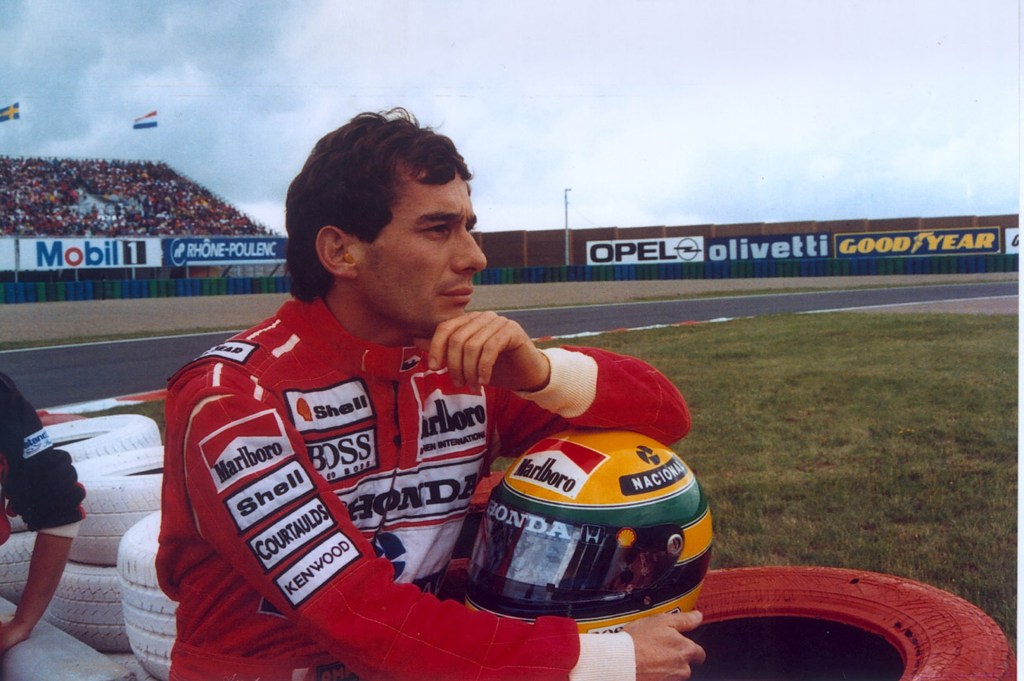
On another unrelated topic, last year (2024) marked the 30th anniversary of Ayrton Senna’s death. “Ayrton Senna from Brazil,” as the famous Brazilian commentator Galvão Bueno used to call him enthusiastically while narrating Senna’s Formula 1 performance, which kept all of Brazil glued to their TVs. Senna also influenced me greatly with the values he embodied: tenacity in the face of immense challenges, generosity and passion among many.

Now, here is where these seemingly unrelated topics come together.
The other day, after greeting my uncle for his birthday, I told him I had watched the Senna miniseries on Netflix. It reminded me of when we used to go to his parents’ house for the weekend and ended the day watching Formula 1 Grand Prix races, rooting for Senna.

He replied with a beautiful message that made me very emotional. He said he had also watched the series and that it reminded him of me. He recalled some episodes from when I was a kid—like how, while driving with me in the backseat about to fall asleep, he would say, “Look, there’s Senna out there!” and I’d wake up immediately, looking for Senna outside the window. I couldn’t remember that memory before he mentioned it, but it was so precious to me because I loved hearing my uncle’s laugh—always full of joy and childlike energy, despite his ability to make us all feel safe and protected.

Then, he reminded me of the day Senna died. It was one of the saddest days in Brazil’s recent history. As crazy as it may sound, you’d have to have been there in Brazil during those years to truly understand. My uncle told me that after learning the news, he came to check on me. We were going to his parents’ house that day, but when he found me, I already knew. We cried together in the elevator while getting ready. Now I remember that moment, though I didn’t before he brought it up. There are many moments of my childhood that I don’t remember—many happy ones.

I’m left with a question: Have I gone from Peter Pan to Peter Banning? Have I become an insensitive workaholic adult who’s lost his marbles and happy thoughts? Maybe, or maybe not. Perhaps Hook will come for me and take me back to Neverland. No! As usual, I’ll need to do the hard work of digging, understanding, and integrating to get there.  But once again, thanks to my uncle, Senna and Peter Pan, I’ve learned something important: it’s never too late to rediscover the joy and wonder we once held close.
Whether through reconnecting with loved ones, revisiting cherished memories, or embracing the values of our heroes, we have the power to reclaim our marbles and rediscover our happy thoughts.

#21 Work, stories, and beyond: redefining my blog’s direction

I started this blog on impulse. I’ve been experimenting with it for a few months now, but I still don’t have a clear idea of where I’m heading.

If I had a clear path for where to take this blog, I would narrow down the topic to something that really thrills me. But since that’s not the case, I decided to broaden it. I definitely want to keep writing about work, as I genuinely believe that in the society we live in, work defines our existence and who we are—whether we like it or not. Work propels everything around us; if we or our machines weren’t constantly working like little bees, our world would collapse. Yes, we should strive to improve work conditions and make them more sustainable, but we can’t stop working.

If you read any book, any short story, or watch any movie, work is always a pillar of the narrative. It defines characters, sets the scene, and shapes time and space—whether it’s in the background or at the forefront of the storytelling.

However, I don’t want to limit myself to writing only about what happens in my work life. I want to explore short stories, random reflections, and maybe even share one-paragraph posts inspired by things people tell me. And while I enjoy the topic of work, I won’t write solely about it.

I’m trying to step away from my usual control-freak tendencies, where I plan and define everything. Instead, I want to lose control and discover something unexpected and new.

With that in mind, I’ve decided to change the name of the blog from Work Thoughts to Beyond My CV. It aligns with my website name, fits the broader purpose, and creates a mini personal brand. Plus, someone else already has a blog called Work Thoughts, which annoyed me quite a bit.

#19 The humbling path of starting over

When I started my new job last November, I thought I would have learned everything there was to know about the role very quickly, that I would have been speaking the smoothest German in no time, and that after a few weeks, I would be having promotion talks with my manager for my outstanding performance.
I came from a very challenging position as a Senior Content Designer, handling the end-to-end content of multiple products in different languages for a tax-filing app. Whatever lay ahead of me, will not be more challenging than that. I thought.
– Besides. – I said to myself. – It’s just a customer support role. How difficult can it be? Plus. – I concluded. – I am a senior professional with years of experience helping people understand complex topics easily.”

I can’t believe the size of the bait I took from my own ego. My arrogance, ignorance, and stubbornness were totally detrimental to me. On the outside, though, I was handling myself very well—I wore, once more, the shoes of a devoted student who’s fully dedicated to learning as much as possible and who’s very appreciative of the opportunity given, especially in these times when having a job feels more like a privilege than a human right. On the inside, feelings of dissatisfaction and frustration corroded me, as I secretly perceived this new beginning as a step back in my career—a feeling that got in the way of the smoother and more pleasant start I was so much looking for.

But paradoxically, what saved me from complete self-sabotage was exactly the intensity of the challenge I was facing, which stimulated my curiosity and willingness to overcome the obstacles and difficulties I encountered.

The first massive challenge I experienced was communicating with colleagues exclusively in German. The funny thing is that a German-speaking job was something I had been looking for since I moved to Germany, but achieving that isn’t simple. You need a good level of German to start from, and despite the hundreds of hours I had invested in courses, tandems, reading books, and watching movies in German, having a normally paced conversation at work is tough. You can’t really stop and ask people to repeat a sentence constantly.

The second challenge was learning new concepts related to computer networking, electronics, and many other technical topics fundamental to understanding the products and customers.

Finally, the third biggest and maybe most complex challenge is understanding the myriad of problems that customers face and learning how to guide them toward the best, most simple, and satisfying solution possible—all while avoiding taking anything personally and being a company cheerleader.

So how did I keep afloat during these first two months in this radical and challenging career change? How did I maintain my sanity while facing such a steep learning curve? Once more, acceptance and surrender really helped me. Understanding that I couldn’t have everything under control as I did after years of experience in other roles, and that I would struggle to communicate with my colleagues and clients in German, was truly like lifting a huge weight off my shoulders. I know that my German will suck for months until it doesn’t anymore; I know I won’t be in my comfort zone in terms of skills and knowledge until I will again; and I know I will struggle to solve most customer problems until I have mastered the most important of them.

Growth is less about perfection and more about perseverance. It’s more about embracing limitations and focusing on incremental improvements than setting flashy goals and unrealistic expectations. When we restart with a series of overwhelming challenges ahead of us, it’s really okay to feel uncomfortable, to struggle, and to sound silly while speaking a very complex foreign language—that’s learning right there, that’s growth right there! Nothing could be better than that.

Things take time, especially when there are big changes involved that we are not used to handling. But things are difficult until they aren’t anymore.

I’m really looking forward to seeing where I’ll be one year from now. At the same time, I want to exorcise from my future any freaking layoff shadow—even though now I know that I can overcome that too.

#18 A compass for the year ahead that works

I initially wanted to write yet another 2024 wrap-up, which would have most likely turned into a me-me-me redundant post filled with complaints about my “almosts” and “not yets” from the past year. Instead, I prefer to share something that brought clarity to previous years and became a reliable tool for a hopeful start to each new year.

Nowadays, we receive end-of-year wrap-ups and new year’s resolutions updates from almost every app on our phones. This barrage can make reflecting on recent experiences and planning ahead feel overwhelming. However, cutting through the noise to find a tool that truly works for us can transform these reflections into powerful and inspiring activities.

For the last four years, my go-to tool has been a booklet called Year Compass (which you can download entirely free here).

I was first introduced to it by my ex-girlfriend. We began filling out our respective booklets together at her parents’ chalet-style home in Brussels, sitting in front of a rattling fireplace as snowflakes fell like tiny meteorites, driven by a strong and gelid wind. Despite this picturesque, almost dreamlike setting, my first experience was painful. It took me at least three hours to complete the entire Year Compass, as it required deep reflection across all the major spheres of life.

Each year, though, the process became easier, and its effectiveness grew to the point where I can’t imagine starting a new year without it.

So, for anyone seeking a way to process their experiences, integrate the past year with a sense of accomplishment and closure, and face 2025 with renewed hope and confidence, I highly recommend filling out this amazing and completely free tool. You can download it easily, and it’s best to complete it before the new year begins—or at the latest, within the first two weeks of January.

#17 Using AI prompts to edit my blog posts

Before I share the tricks that help me polish my posts without distorting what I originally wrote, let me confess that I’ve cut a few corners in the past using AI prompts.

The most questionable trick I’ve used was asking ChatGPT to draft a conclusion by feeding it only two-thirds of a written post. There’s no excuse—I feel bad even admitting it—but at the time, I was overwhelmed with life and couldn’t come up with conclusions. Later, I realized that not every post needs one. Sometimes, the post is complete when you’ve run out of meaningful things to say, and it reads perfectly fine without moral lessons, unsolicited advice, or redundant perspectives.

The reason I felt guilty—if it’s not obvious—is the deep respect I have for the craft of writing and for writers of all kinds, those who carefully consider every word they use. It felt like a betrayal of my principles and my own creative process, and it’s not something I ever want to repeat.

That said, I won’t entirely dismiss the power of AI-driven tools to help proofread and refine my writing or to catch inconsistencies and inaccuracies that my own eyes might miss—especially given how little time I can dedicate to this time-consuming activity.

Here are a few helpful, ethically sound (by my standards) and simple prompts I’ve developed over time:

Proofreading

Writers know that no piece of writing—regardless of its audience or purpose—should go public without at least a second pair of eyes reviewing it. Proofreading styles vary greatly: some people practically rewrite your work, while others stick to spotting typos and fixing orthographic issues.

But here’s the thing—those “second eyes” require time, experience, and they’re rarely free (unless you know a benevolent soul whose sole priority is helping you improve). This is where ChatGPT can be incredibly handy. My prompt for this is:

  • Correct any grammatical, spelling, or punctuation errors.
  • Ensure clarity and consistency without altering the intended tone or writing style.
  • Preserve the structure and flow of the text unless minor adjustments are necessary for readability or coherence.
  • Highlight unclear sections or sentences that could benefit from rephrasing, while suggesting minimal, non-intrusive edits.

Fact-Checking

So far, I’ve written only a few posts that required this prompt. It’s for posts where I reference studies or attempt a journalistic analysis of societal issues. I aim to research thoroughly, check sources, and quote or paraphrase without inaccuracies.

This is something I’d like to focus on more, but it’s not a top priority right now. Here’s the prompt I use for fact-checking:

  • Offer concise feedback for maintaining journalistic integrity and readability.
  • Identify any claims, data points, or studies that require verification.
  • Suggest credible sources to verify the information or correct inaccuracies, if any.
  • Highlight sections where citations or additional clarity could improve reliability.
  • Ensure quotes are accurately represented and properly attributed.

SEO

I wish I could say I’m passionate about SEO, but that’s not the case—yet. Despite reading books, taking courses, and watching videos on the subject, it hasn’t fully clicked for me. Maybe one day!

For now, I use this prompt to tackle SEO-related tasks:

  • Propose broad categories that accurately reflect the main themes and context of the post, ensuring they fit a typical WordPress blog taxonomy.
  • Suggest relevant tags to help readers and search engines quickly identify key topics or concepts discussed in the post.
  • Write a max 100 characters, human-readable excerpt summarizing the core idea of the blog post in an engaging and SEO-friendly way. Aim to capture the reader’s interest while reflecting the content accurately.

There you have it—my secrets. I hope you find them helpful! Please feel free to leave a comment if you have any tricks to share, resources you recommend, or books and authors that have inspired you.

#12 The paradox of self-awareness

(Average Reading Time: 6 minutes)

Recently, I watched a wonderful film called E.1027 – Eileen Gray and the house by the sea. What I loved most about it, without going into a detailed plot description, was the self-awareness displayed by the main character as she navigated intense events in her career and personal life.

I was struck by her ability to discern, with extreme clarity, what she wanted and where she drew her boundaries. She always knew what affected her, in what ways, and what she wanted to do about it. She would then act in alignment with her needs, accepting the consequences without victimizing herself, while allowing space for the emotions that naturally arose.

There were simple things she said that were impactful, eye-opening, and at the same time extremely relatable. It felt as though I had arrived at the same conclusions myself many times before—only to forget them again and again.

For example, at one point she says something along these lines regarding how relationships disrupt her work:
“A constant stream of conversations and small activities prevents me from focusing on projects I value […] I need to spend days in a row on my own to allow ideas to flow again.”

At another moment, she reflects:
“People and open spaces sometimes frighten me.”

Or, as a conclusion on her search for a place she could call home:
“The home I was looking for was in my imagination, in my work.”

I was moved by these statements, primarily because they were part of the character’s inner dialogue, free from judgment and filled with compassion.

And that’s where, once again, I acknowledged the power of self-compassion—the value of a kind and empathetic inner dialogue, which has such profound potential to support us through life’s challenges.

Yet there’s also a deceiving aspect to self-awareness. I think it’s essential to allow self-awareness to simply be, rather than overthinking it as a concept. Our minds are like lighthouses: they illuminate what needs attention, although sometimes we need to elevate our perspective to truly see the full panorama.

Self-awareness is not a destination; it’s an evolving aspect of our growth, and it requires an openness to paradox. Embracing self-compassion alongside self-awareness can help us navigate this journey, allowing us to uncover insights and perspectives that guide us—perhaps not always where we expected, but ultimately, where we need to be.