Author Archives: Carlos

Unknown's avatar

About Carlos

I love writing.

#25 Coerenza interiore e cambiamenti personali tra verità e onestà

Onestà: La qualità interiore di chi si comporta con lealtà, rettitudine e sincerità, in base a principi morali ritenuti universalmente validi.

Verità: Carattere di ciò che è vero, conformità o coerenza a principi dati o a una realtà obiettiva.

Vocabolario Treccani

Queste definizioni, prese dal vocabolario e lette al volo nel contesto in cui viviamo oggi, mi fanno pensare a una vecchia cornice impolverata appesa al muro di una casa abbandonata chissà dove. Devo dire che molte altre parole che incarnano ideali morali hanno su di me lo stesso effetto malinconico, se considerate in relazione alla realtà che ci circonda. Eppure, continuo a cercarle dentro di me, a perdermi in un mondo che oscilla tra il complesso e il superficiale, spesso confondendomi.

L’onestà, come valore, l’ho sempre distinta dalla verità come concetto, almeno inconsciamente – o almeno credo. Tuttavia, quando mi trovo coinvolto in dinamiche complesse, sia sentimentali che professionali, a volte utilizzo questi due termini in modo intercambiabile, confondendo i loro significati. Ma questa confusione, tutto sommato, la considero positiva perché mi spinge a riflettere più attentamente su entrambi. Non mi interessa tanto esplorare il loro significato o l’etimologia – non avrei le competenze necessarie, non essendo né linguista, né antropologo, né ricercatore. Piuttosto, mi interrogo su ciò che rappresentano per me.

Istintivamente direi che verità e onestà hanno per me un valore quasi assoluto, guidandomi in ogni decisione, azione o interazione quotidiana. Ma affermarlo sarebbe una bugia. Essere onesto, dire la verità e comportarmi in modo autentico è un’impresa che spesso mi sovrasta. Per me, infatti, l’onestà non si limita a dire la verità a qualcuno, ma implica agire in linea con i miei valori, come suggerisce la definizione riportata all’inizio di questo articolo. Se riesco ad agire in linea con i miei principi morali, allora la questione superficiale del “dire la verità” nemmeno si pone, perché ogni azione sarebbe allineata con il mio autentico io, con l’immagine che ho di me stesso.

Ed è qui che mi trovo in un’impasse: l’immagine che ho di me potrebbe non corrispondere alla verità. Eppure, quella stessa immagine, nel tempo, potrebbe guidarmi verso la verità. Ma anche se, in un dato momento, essa fosse effettivamente in linea con il mio autentico io e con i principi morali che ho scelto come base della mia identità, questo stato non sarebbe altro che temporaneo. Io mi percepisco in continua evoluzione, in costante cambiamento, accompagnando un mondo che viaggia a una velocità incredibile – o forse sono io quello lento… chi lo sa. Che il mondo sia veloce o io lento, alla fine non importa.

Io non credo – nel senso di credere devotamente o indiscutibilmente a qualcosa. Questo mio continuo evolvermi ha consolidato un approccio critico e curioso, che mette in discussione tutto.

La morte, ad esempio, non mi spaventa. Invecchiare non mi infastidisce. Perdere i capelli non mi rende paranoico. La solitudine, cambiare amicizie, ricominciare in una nuova città, traslocare in un altro paese, lasciare tutto per un nuovo inizio: sono cose che ho fatto ripetutamente nella mia vita, a volte per circostanze esterne, altre per decisioni personali.

Nonostante questi cambiamenti continui, i miei principi morali guida sono rimasti più o meno gli stessi. A volte mi hanno guidato con maggiore forza, altre con meno. Ed è strano: mentre scrivo, mi viene in mente un altro concetto, quello di fede. Solo nominarlo sembra contraddire tutto ciò che ho detto prima sul fatto che io non credo.

Ma benché le mie riflessioni su questo e mi molti altri temi mi portino spesso contraddizioni o riflessioni inconcludenti, trovo conforto nella complessità e nell’evoluzione costante del mio rapporto con la verità e l’onestà.

#24 Making space for the silence within

There are moments when my mind shuts down—when no matter how much effort I put into deciding what to do next, my brain simply refuses to respond or act. It doesn’t matter if it’s about preparing the next meal or planning the next big step in my life. My body won’t move. It feels like a meteorological phenomenon inside my soul—a heavy, warm wind pressing down. Sometimes it lasts a few hours; sometimes, it lingers for a couple of days.

I used to resist these moments, seeking shelter in unhealthy ways by blaming myself and feeling resentful. I would desperately try to fill the emptiness with random, unplanned actions that lacked intention or purpose. After all, isn’t that what we’re taught by the outside world? “Brush it off.” “Just do something.”
Often, this overwhelming wind would push me into a deep hole, where solitude and loneliness threatened to consume me.

This weekend, the strong, warm wind came again. However, for some months now, I’ve stopped resisting it. I let it shake me. I let it push me into the hole. And in that quiet, I found myself. I sat in silence, under an imaginary tree, and hugged myself. I whispered, “Don’t worry. No rush. It’s all good. This will pass.” And it did.

I decided to keep caring for myself in my own way—not in the way the world expects me to. My thoughts were scattered, and there was some anxiety, but I allowed it to exist.

I went for a walk. Luckily, the sun was shining—a rare sight in Berlin’s winter skies. Then I went to the sauna, reconnecting with my body and soul. When I returned home, the wind within me had softened into a gentle, pleasant breeze.

#23 A cross-cultural journey leading to authenticity

I recently had a conversation with a German friend that brought up an interesting topic highlighting cultural differences and perspectives.
We started talking about ethics in customer service and sales, then expanded the conversation to the importance of being authentic and honest. From his point of view and upbringing, being one’s true self and saying what one thinks is essential and non-negotiable. Today, I agree with him 100% on this viewpoint, but back then, I was caught up in the mechanisms of the main cultures I was exposed to as a child and adolescent. I probably wouldn’t have even been able to acknowledge its importance.

We were drinking tea, and he picked up a mug to make a point:
“In Germany, I would sell this (the mug) to you by saying, ‘You can drink from it.’ Maybe I would additionally mention the quality of the material, but that’s it.”

Yes, I thought, that aligns with my experience with Germans—a very essential, functional, and honest approach. That’s one of the main reasons I like living here: I don’t lose sleep trying to interpret the hidden meanings of something someone told me the day before. They say what they think and think what they say, most of the time.

“In Italy and Brazil, that wouldn’t work,” I replied. “Marketing is a powerful component in selling any product, and you need to deliver a story that touches the heart to catch someone’s attention.”

That’s not exactly what I said; I’m paraphrasing a little. We were speaking in German, so I probably said something even more basic, but that’s what I was trying to communicate. However, as I wrote this paraphrased version, I noticed the issue again in the words “to catch someone’s attention.”

From my experience, in Latin America and Mediterranean countries, emotions and feelings are deeply embedded in communication. Some might perceive this as dramatic, while others might call it passionate. The challenge, however, is that one can easily get carried away by emotions and stories. Trying to convince an audience—or simply “to catch their attention”—by leveraging emotions is a tricky endeavor. It can often blur into manipulation, where pleasing others, telling white lies, or navigating situations through embellished stories (whether true or not) becomes a common practice.

This approach often shifts the focus toward meeting the expectations of others rather than adhering to the values that are meaningful to oneself. As a result, it sometimes feels like everyone is playing a role rather than being their authentic selves. And yet, I recognize that these are cultural traits of the societies and communities I’ve been exposed to. Of course, there are ways to develop ethical practices within these cultural frameworks, but I’d argue that it’s challenging to stay authentic—or, to put it less abstractly, to remain connected to one’s core and true self.

The greater danger is that, in constantly trying to meet others’ expectations, we risk losing touch with our own needs. Personally, I feel I’ve grown closer to understanding my own needs in the five years I’ve lived in Germany than in the thirty-three years I lived elsewhere. Perhaps this is simply part of my natural maturation process, unrelated to the cultural environment—one can never be entirely certain. Still, I believe living here has significantly influenced this journey.

I say all this without resentment or regret about my past or roots—or at least, I hope that’s true.

To close, I hope I haven’t hurt anyone’s feelings with this anecdotal and spontaneous reflection. I realize cultural differences are a slippery slope and are often prone to stereotyping. If I’ve fallen into that trap, I apologize in advance.

#22 My forgotten Happy Thoughts

Toodles: [Searching for something on the floor] Lost, lost, lost.
Peter Banning: Lost what?
Toodles: I’ve lost my marbles.

With this short dialogue, we were introduced to Toodles in Hook, the amazing Peter Pan movie from the ’90s starring Robin Williams. The way I understood it, the marbles mentioned in the dialogue were a metaphor for Peter Pan’s happy thoughts—something he had literally lost, growing up into an insensitive workaholic adult named Peter Banning. Later in the movie, he finds them again (both Toodles’ marbles and his own happy thoughts) after an amazing adventure in Neverland to rescue his children from the clutches of Captain Hook, who had kidnapped them.

On a separate and unrelated subject, a few days ago was the birthday of one of the most important people I’ve met in my entire life: my uncle Beto. During my childhood, Uncle Beto was like a father to me—the best one anyone could wish for.

He made me laugh and taught me amazing things, like putting glass on my kite strings to win kite battles against other very competitive kids. He allowed me to express myself: smile, laugh, make silly jokes, and ask a thousand times the same question—he would actually play along. He never dismissed me and always explained things in a way that sparked curiosity, even when I had no idea what he was talking about.

I could spend an entire day listing the reasons why he played an immense role in my life and the person I’ve become. Despite this, he never sought recognition or validation. Life eventually pulled us apart for reasons too long to explain, but hardly a day goes by without me thinking of him as one of the heroes of my childhood.

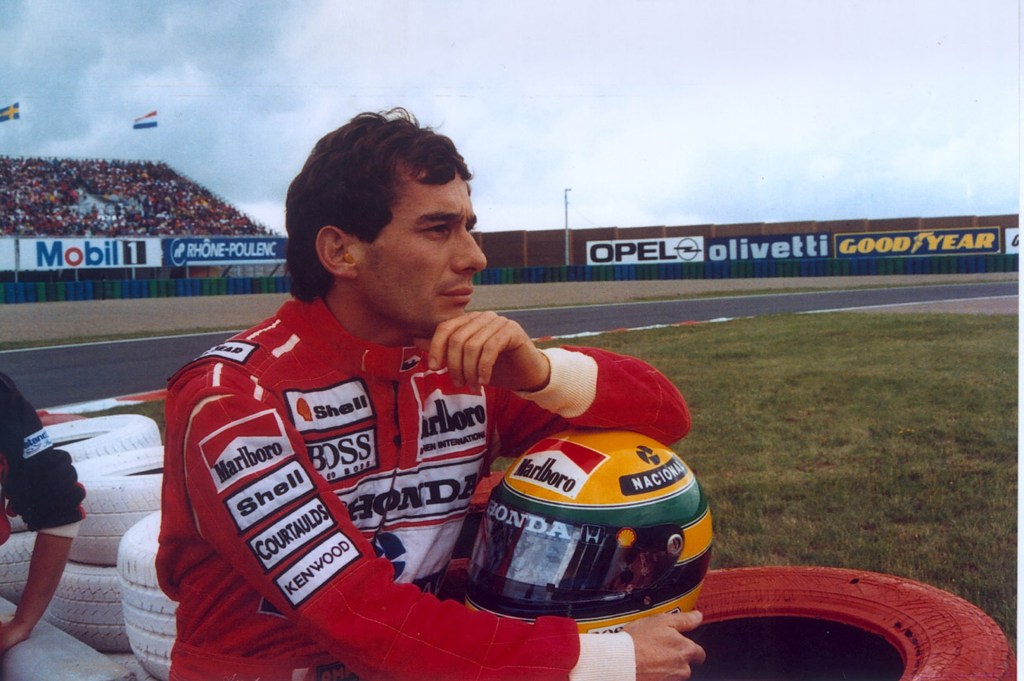
On another unrelated topic, last year (2024) marked the 30th anniversary of Ayrton Senna’s death. “Ayrton Senna from Brazil,” as the famous Brazilian commentator Galvão Bueno used to call him enthusiastically while narrating Senna’s Formula 1 performance, which kept all of Brazil glued to their TVs. Senna also influenced me greatly with the values he embodied: tenacity in the face of immense challenges, generosity and passion among many.

Now, here is where these seemingly unrelated topics come together.
The other day, after greeting my uncle for his birthday, I told him I had watched the Senna miniseries on Netflix. It reminded me of when we used to go to his parents’ house for the weekend and ended the day watching Formula 1 Grand Prix races, rooting for Senna.

He replied with a beautiful message that made me very emotional. He said he had also watched the series and that it reminded him of me. He recalled some episodes from when I was a kid—like how, while driving with me in the backseat about to fall asleep, he would say, “Look, there’s Senna out there!” and I’d wake up immediately, looking for Senna outside the window. I couldn’t remember that memory before he mentioned it, but it was so precious to me because I loved hearing my uncle’s laugh—always full of joy and childlike energy, despite his ability to make us all feel safe and protected.

Then, he reminded me of the day Senna died. It was one of the saddest days in Brazil’s recent history. As crazy as it may sound, you’d have to have been there in Brazil during those years to truly understand. My uncle told me that after learning the news, he came to check on me. We were going to his parents’ house that day, but when he found me, I already knew. We cried together in the elevator while getting ready. Now I remember that moment, though I didn’t before he brought it up. There are many moments of my childhood that I don’t remember—many happy ones.

I’m left with a question: Have I gone from Peter Pan to Peter Banning? Have I become an insensitive workaholic adult who’s lost his marbles and happy thoughts? Maybe, or maybe not. Perhaps Hook will come for me and take me back to Neverland. No! As usual, I’ll need to do the hard work of digging, understanding, and integrating to get there.  But once again, thanks to my uncle, Senna and Peter Pan, I’ve learned something important: it’s never too late to rediscover the joy and wonder we once held close.
Whether through reconnecting with loved ones, revisiting cherished memories, or embracing the values of our heroes, we have the power to reclaim our marbles and rediscover our happy thoughts.

#21 Work, stories, and beyond: redefining my blog’s direction

I started this blog on impulse. I’ve been experimenting with it for a few months now, but I still don’t have a clear idea of where I’m heading.

If I had a clear path for where to take this blog, I would narrow down the topic to something that really thrills me. But since that’s not the case, I decided to broaden it. I definitely want to keep writing about work, as I genuinely believe that in the society we live in, work defines our existence and who we are—whether we like it or not. Work propels everything around us; if we or our machines weren’t constantly working like little bees, our world would collapse. Yes, we should strive to improve work conditions and make them more sustainable, but we can’t stop working.

If you read any book, any short story, or watch any movie, work is always a pillar of the narrative. It defines characters, sets the scene, and shapes time and space—whether it’s in the background or at the forefront of the storytelling.

However, I don’t want to limit myself to writing only about what happens in my work life. I want to explore short stories, random reflections, and maybe even share one-paragraph posts inspired by things people tell me. And while I enjoy the topic of work, I won’t write solely about it.

I’m trying to step away from my usual control-freak tendencies, where I plan and define everything. Instead, I want to lose control and discover something unexpected and new.

With that in mind, I’ve decided to change the name of the blog from Work Thoughts to Beyond My CV. It aligns with my website name, fits the broader purpose, and creates a mini personal brand. Plus, someone else already has a blog called Work Thoughts, which annoyed me quite a bit.

#20 Globalist jackal: is there such a thing?

In the last few decades, thanks especially to the internet and a more globalized world, a segment of Earth’s citizens has progressively benefited from a borderless reality, allowing them to move and establish themselves almost anywhere they desire — a trend exacerbated following the COVID pandemic.

The reasons for such a choice are many, depending on the profession one exercises, a search for better living conditions, a drive to live differently according to rules and cultural norms that better resonate with them, and so forth. This practice has given rise to enticing titles that the privileged among us proudly embrace: globe trotters, digital nomads, expats, remote workers.

In many cases, though, this decision to move somewhere else has been driven by a simple impulse to explore a different corner of the world for a short period of time, only to then move on to another, making this some sort of appealing practice. There are many documentaries available online of influencers, for example, going somewhere like India only to criticize the way other cultures live and leave with a pros and cons list to share with their audience, disregarding the long-term consequences of their actions.

Lately, I have been reflecting on whether this last category of professionals who wander around the globe deserves a more specific title with a connotation that fits this type of mindset.

Today, we are more aware that the privilege of some comes at the expense of others, often decreasing the quality of life for local communities. Perhaps we’ve always known this, but we are now more mature and collectively prepared to take responsibility for our actions. Despite this, no term has been coined to properly define this category of nomads. This has led me to question whether a more nuanced vocabulary might better highlight the less glamorous consequences of some people who take advantage of global professional mobility. One term I’ve been pondering is globalist jackals.

The existing terms are usually associated with the appealing aspects of global mobility: cultural depth fostered by living in different parts of the world; the boost to economies through spending power and new businesses in areas with lower living costs; the flexibility of work environments; and inclusivity. These and many other aspects have served as catalysts for global change and innovation.

Unfortunately, there is another side to the coin.

What I would call globalist jackals, in particular, drive up living costs in the areas where they relocate. Their demand for short-term rentals reduces housing availability for residents. They displace communities, contributing to over-tourism, disrupting local cultures, and eroding traditional ways of life, leaving some communities feeling exploited or undervalued.

Moreover, individuals benefiting from global mobility who genuinely wish to integrate and adapt to local customs may face misjudgment or unjust accusations, being lumped together with those who move on to their next destination without meaningful interaction or pondering their choices with reasons beyond the drive to “discover the world.”

Legal gray areas are created and exploited by individuals with selfish intentions, with little to no regard for local community needs. For example, it’s known that governments struggle to tax digital nomads who earn abroad while utilizing local resources, even though this varies greatly by country and specific tax treaties.

It has also been reported that what I would define as globalist jackals exacerbate inequalities, widening the gap between those with access to technology, education, and global mobility versus those without.

While there are many other factors that could justify coining the term globalist jackals, it’s crucial to recognize the dangers of using such pejorative terms indiscriminately. Doing so risks fueling discriminatory and even racist narratives.

The debate around the terminology we use to describe global professionals underscores the need for accountability and awareness in a world where profiting from mobility by choice, and not by survival-oriented need or duty, is both a privilege and a responsibility. As global citizens, we must understand what impact our ambitions have on others, acknowledging that consequences may take time to arise and often unfold in unpredictable ways.

This is a speculative and reductive take on a much broader and more complex topic, one that has been researched and discussed in much greater depth. So, please take my perspective with a grain of salt. I am curious to hear your thoughts. Have you previously reflected on this topic, specifically the glamorous terminology used to define this trend? Does the term globalist jackal make sense? What other terms would you suggest for discussing this phenomenon?